
Artificial Intelligence

How AI Translation Is Getting Good Enough to Challenge Human Translators
Not long ago, machine translation was a running joke, the kind of thing that turned restaurant menus into nonsense and made international emails cringeworthy. That reputation is aging badly. The latest AI translation tools are producing output that, in many everyday contexts, is difficult to distinguish from a competent human translation, and that's starting to shake up an industry that assumed it had more time.

Why the Open-Source AI Movement Is Winning More Than It Loses
A year ago, the standard line was that only a handful of well-funded labs could build frontier AI models. That line is getting harder to defend. Open-weight models are now landing within striking distance of closed, proprietary systems on many benchmarks, and they're doing it while giving developers something closed labs can't: a model you can actually download, inspect, and run on your own terms.

Can AI Models Actually Reason or Are They Just Pattern Matching?
Ask a language model to solve a logic puzzle, and it will often get it right. Ask it to explain its reasoning step by step, and it'll walk you through the process coherently. Ask it the same puzzle with the numbers changed slightly, and sometimes it gets it completely wrong in a way that makes no sense if it had actually reasoned through it.

Can AI Really Replace a Therapist or Is That a Dangerous Idea?
The question keeps coming up, and it's easy to see why. AI chatbots are available at 3am. They don't judge you. They don't cancel appointments or charge $200 an hour. For a lot of people – particularly those who've never been able to access therapy at all – the idea of an always-available, conversational AI that listens and responds thoughtfully sounds genuinely appealing.

Can AI Tools Actually Help with Mental Health or Do They Make It Worse?
AI chatbots have become a genuine first stop for a lot of people processing difficult emotions, working through anxious thoughts, or just wanting to talk something out at 2am when no one else is available. This isn't a fringe use case anymore – it's common enough that mental health researchers, clinicians, and regulators are actively studying it. The honest answer to whether this helps or hurts is genuinely mixed, and it depends heavily on what specifically someone is using AI for, how they're using it, and what they need instead.

How AI Is Changing the Way Software Gets Written
Ask a developer who's been in the industry for over a decade what their day-to-day looks like now compared to five years ago, and you'll probably hear some version of the same thing: a meaningful chunk of the code they used to type themselves is now generated by an AI tool, with them reviewing and adjusting rather than writing from a blank file. This shift has happened fast, and it's reshaping not just individual workflows but how teams think about what a software engineer's job actually involves.

How AI Is Reshaping the Job Market Without Replacing Most Jobs
Every few weeks brings another headline warning that AI is coming for your job, and yet most people going to work this week are doing largely the same job they had last year, just with a few new tools sitting in their workflow. The real story of AI's impact on employment is less dramatic than the headlines suggest, but arguably more interesting, because it's a story about tasks changing shape, not jobs disappearing wholesale.

How Diffusion Models Work Without the Technical Jargon
Type a sentence like "a fox reading a book in a library, watercolor style" into an AI image generator, and a few seconds later you have a genuinely coherent image that never existed before. The technology behind most of these tools, including Midjourney, DALL-E, and Stable Diffusion, is called a diffusion model, and while the underlying math is genuinely complex, the core idea behind it is surprisingly intuitive once you strip away the technical vocabulary.

Is AI-Generated Art Actually Threatening Creative Jobs?
The images started appearing everywhere almost overnight. Photorealistic portraits with no photographer. Album covers with no illustrator. Marketing campaigns built in hours instead of weeks. And with them came a question that hasn't gone away: if a machine can generate a finished, usable image in seconds, what happens to the people who used to make those images?

The Business Case for Running Your Own Self-Hosted AI
Every month, another business gets a wake-up call about how much they're actually spending on AI API calls once usage scales past the pilot phase. That growing bill is one of several reasons a meaningful number of companies are now seriously evaluating self-hosted AI, running open-weight models on their own infrastructure instead of routing every request through a third-party provider's API.

The Real Reason AI Search Is Struggling to Replace Google
Ask around and you'll hear a lot of confident predictions that AI chatbots are about to make traditional search engines obsolete. Yet Google still handles the overwhelming majority of search queries worldwide, and that hasn't shifted nearly as dramatically as the "AI killed search" narrative suggests. Understanding why reveals something genuinely interesting about what search actually does versus what AI chat interfaces are currently good at.

What Are AI Agents and How Are They Different From Chatbots?
If you've been following the AI space lately, you've probably noticed a shift in the language. "Chatbot" is slowly being replaced by "AI agent" in product announcements, tech headlines, and company pitches. They sound similar enough that it's easy to assume it's just rebranding. It isn't.

What Does It Mean When an AI Model Goes Multimodal?
Not long ago, chatting with an AI meant typing a question and getting text back. That was the whole interaction. Then something shifted. You could suddenly send a photo and ask what was in it. Then describe an image you wanted and watch it appear. Then speak out loud and hear a response. Now some models can process all of that – and more – in a single conversation.

What Is AI Memory and Why Does It Change How Models Feel to Use?
If you've ever explained something to an AI assistant and then had to explain the exact same thing again five minutes later in a new chat, you already understand the frustration that AI memory is trying to solve. The technology itself isn't new – but the way it's being built into tools people use every day is shifting fast, and it changes the experience of using these systems in ways that are genuinely hard to ignore.
What Is Constitutional AI and How Does It Try to Make Models Safer?
Getting an AI to behave well is harder than it sounds. You can't just tell a language model to "be helpful and not harmful" and expect it to figure out the details. The model needs something more concrete – a framework, a set of principles, a way of evaluating its own outputs against a standard it actually understands.

What Is Prompt Injection and Why Is It a Security Risk?
If you've been paying attention to AI security conversations in the last couple of years, you've probably seen the term "prompt injection" come up with increasing urgency. It sounds technical, but the underlying idea is surprisingly intuitive — and once you understand it, you'll start noticing how many places it could cause problems.

What Is Retrieval-Augmented Generation and Why Should You Care?
Language models have a memory problem. They know a lot – trained on vast amounts of text – but everything they know is frozen at a point in time. Ask one about something that happened last month, or something specific to your company's internal documents, and it either guesses or admits it doesn't know. Neither is great when you're trying to build something useful.

What Is Speculative Decoding and Why Does It Make AI Faster?
If you've noticed AI chatbots responding noticeably faster over the past year or two, there's a good chance speculative decoding is part of the reason why. It's one of those behind-the-scenes engineering tricks that doesn't get much mainstream attention, but it's quietly become one of the most important techniques for making large language models feel snappier without needing more powerful hardware.

What Is Synthetic Data and Why Is AI Training Depending on It?
The companies building the most powerful AI systems in the world are quietly running into a wall. It's not a hardware problem or a talent shortage – it's a data problem. Specifically, they're running out of the kind of high-quality, real-world data that AI models have historically needed to learn from. The response to that problem is reshaping how AI is built, and it goes by a name that sounds almost paradoxical: synthetic data.

What Is an AI Sandbox and Why Do Enterprises Use Them?
Every big company experimenting with AI right now is wrestling with the same quiet fear: what happens if an employee pastes sensitive customer data into a chatbot, or a model generates something embarrassing that ends up in a client-facing report? The answer most enterprises have landed on isn't to ban AI outright. It's to build a sandbox around it first.

What Is an AI Wrapper and Why Are So Many Startups Building Them?
If you've noticed a flood of new AI startups that all seem to do roughly the same thing – take an existing AI model and package it into a slick app for a specific use case – you've noticed a real trend. These are commonly called "AI wrappers," and understanding what they actually are helps explain both the current startup landscape and what to realistically expect from the next wave of AI-branded apps in your feed.
What Is the Difference Between AI Safety and AI Alignment?
These two terms get used almost interchangeably in a lot of AI coverage, which creates genuine confusion, since they actually refer to related but distinct areas of work. Understanding the difference matters if you're trying to follow AI policy discussions, research announcements, or debates about AI risk with any real clarity, rather than treating them as synonyms for "making AI not bad."

What Is the Difference Between Fine-Tuning and Prompting a Model?
If you've spent any time around AI tools, you've probably heard both terms thrown around – often in the same breath, sometimes interchangeably. They're not the same thing, though, and confusing them leads to real misunderstandings about what these systems can and can't do. One changes the model itself. The other just changes how you talk to it.

What Is the Difference Between Narrow AI and General AI?
You've used narrow AI today. You almost certainly did it before breakfast. Every time a streaming service surfaces the right show, your email filters spam, or your phone unlocks with your face, you're interacting with it. But general AI – the kind that reasons the way humans do – doesn't exist yet, and how far we are from it is one of the most genuinely contested questions in technology right now.

What Is the Model Context Protocol and Why Are Developers Excited About It?
If you've spent any time in developer circles lately, you've probably seen "MCP" mentioned alongside terms like agents, tool-calling, and AI workflows, usually with a tone somewhere between curiosity and genuine excitement. The Model Context Protocol isn't flashy in the way a new chatbot feature is, but it's quietly solving one of the most annoying problems in building useful AI tools, which is exactly why developers can't stop talking about it.
Why Are AI Benchmark Results Becoming Harder to Trust?
Every few weeks, a new AI model drops with a headline claiming it outperforms the previous best on some set of benchmarks. The numbers go up, the charts look impressive, and the press release implies a meaningful leap forward. But a growing number of researchers, engineers, and careful observers are asking a pointed question: do these scores actually tell us anything useful anymore?

Why Are AI Hallucinations So Hard to Fix?
At some point, you've probably caught a language model confidently stating something that was completely wrong. Not vague or uncertain – just flatly incorrect, delivered with the same fluency as everything else it says. A made-up citation. A historical event that didn't happen. A legal case that never existed, cited with a real-sounding docket number. The phenomenon has a name – hallucination – and despite years of active research, it remains one of the most stubborn problems in modern AI.
Why Are Artists Suing AI Companies and What Are the Likely Outcomes?
If you've spent any time in creative communities online over the past few years, you've probably seen the frustration boiling over – artists, illustrators, musicians, and writers accusing AI companies of training their models on copyrighted work without permission or payment. This isn't a fringe complaint anymore. It's become one of the defining legal battles of the AI era, with real lawsuits, real courts, and outcomes that will shape how AI companies operate for years to come.

Why Are Companies Building Private AI Instead of Using Public Models?
There's a quiet but significant shift happening across the corporate world right now. Companies that spent the past two years experimenting with public AI tools are increasingly pulling those workloads back in-house – building their own models, deploying privately hosted versions of open-source ones, or contracting specialized AI providers rather than routing sensitive data through consumer-grade APIs.

Why Do AI Models Need So Much Energy to Train?
Training a large AI model consumes roughly as much electricity as a small town uses in a year. That's not a metaphor or an exaggeration – it's a number that researchers have actually calculated, and it's climbing. The question of why that is, and whether it has to be, is one of the more important conversations happening in tech right now.
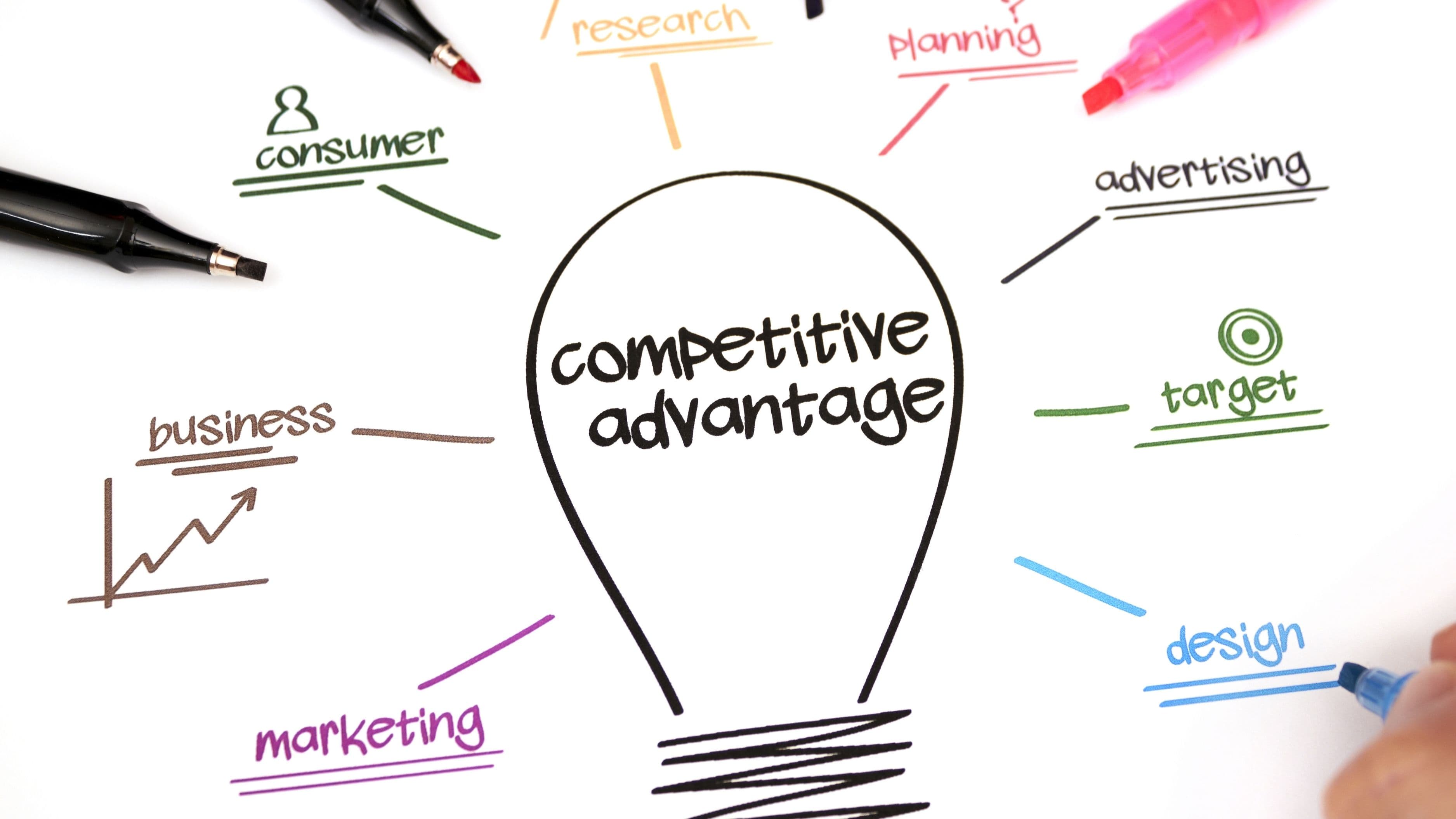
Why Fine-Tuning a Model Is Becoming a Competitive Advantage
For a while, the AI conversation was dominated by a simple question: which foundation model is best? GPT, Claude, Gemini, Llama, pick your favorite and build on top of it. That question is starting to matter less than it used to, because the companies actually pulling ahead aren't necessarily using a "better" base model, they're fine-tuning whatever model they've chosen into something meaningfully more useful for their specific problem. That shift, from picking a model to shaping one, is turning into a real competitive edge.
Why Is AI Voice Cloning So Difficult to Regulate?
A few seconds of audio is now enough. With the right tool and a short clip of someone speaking, you can generate a synthetic voice that sounds like that person saying anything at all. The technology has improved faster than almost anyone predicted, the tools have become cheap and widely accessible, and the gap between what's technically possible and what's legally addressed is growing wider by the month.
Why Is Context Window Size the Metric That Actually Matters Right Now?
For a while, the AI conversation was dominated by benchmark scores and parameter counts – numbers that sounded impressive but didn't always translate to a noticeably better experience for actual users. Lately, a different metric has moved to the center of the conversation:
Explore other categories
Same editorial standard, different decisions.
AI Coding Tools
Agent comparisons, MCP setups, local models, and the workflows that actually ship.
Browse AI Coding Tools
Error Fixes
Exact root causes and permanent fixes for the bugs that stop your ship.
Browse Error Fixes
Internet Culture
Browse Internet Culture
Privacy & Security
Browse Privacy & Security
Tech & Innovation
Browse Tech & Innovation
Tools & Career
Developer tooling, security patterns, and career moves that compound.
Browse Tools & Career