
That shift has a name: multimodality. And it's one of the most significant changes in how AI systems are being built and used right now. Understanding what it actually means – beyond the marketing language – is worth your time, because it changes not just what AI can do, but what it means for the tools and platforms that are increasingly woven into everyday life.
What "Modality" Actually Means
In the context of AI, a modality is simply a type of input or output. Text is a modality. Images are a modality. Audio, video, code, and even structured data like spreadsheets are all modalities. A unimodal model is one that works with a single type – like an early language model that only processed written text, or an image classifier that could only look at pictures and label them.
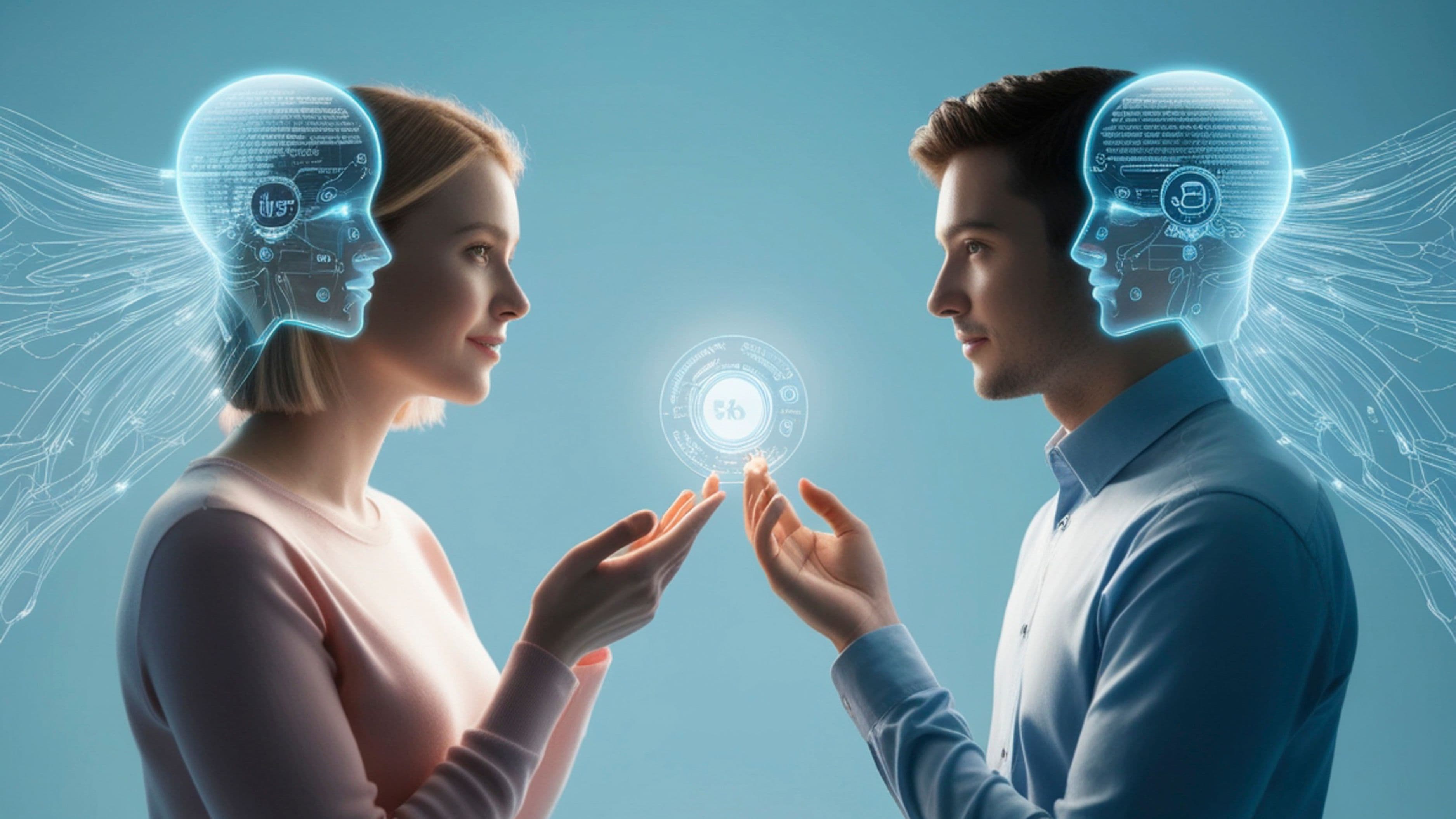
A multimodal model is one that can handle more than one type of input or output, ideally in an integrated way. The key word there is integrated. Bolting a speech-to-text converter onto the front of a text-only AI so it can technically "hear" you isn't really the same as a model that was trained from the ground up to understand the relationship between spoken language and meaning. One is a pipeline of separate tools. The other is a genuinely different kind of system.
The distinction matters because integrated multimodality is what allows a model to do things that feel surprisingly human – like looking at a photo of a broken appliance and describing what's wrong with it, or listening to a piece of music and identifying its emotional tone, or watching a short video clip and summarizing the conversation happening in it.
How Multimodal Models Are Actually Built
To understand what makes this work, it helps to know a little about how AI models are trained. A language model learns by processing enormous amounts of text and learning the statistical relationships between words, sentences, and ideas. It develops a kind of internal representation of meaning – not understanding in the way humans understand, but a rich map of how concepts relate to one another.
A multimodal model does the same thing, but across different types of data simultaneously. During training, it's exposed to images paired with text descriptions, audio paired with transcripts, video paired with captions, and so on. Over time it learns to build shared internal representations – ways of encoding meaning that are agnostic to which modality the information came from. A picture of a dog and the word "dog" and a recording of someone saying "dog" all point toward the same underlying concept in the model's internal space.
This shared representational space is what makes the magic happen. It's why you can show a multimodal model a photo and ask it a question in text, and it can answer coherently – because both inputs have been mapped into the same conceptual territory.
Researchers often call the components that translate between raw input and this shared space "encoders" – an image encoder for visual data, an audio encoder for sound, and so on. The model learns to align these encoders so that related concepts across modalities end up close together in its internal map.
What Multimodal AI Can Actually Do Right Now
The capabilities of current multimodal models span a surprisingly wide range, and they're evolving quickly enough that any specific list starts to feel dated within months. But here's where things genuinely stand today.
Vision and text is the most mature pairing. Models like GPT-4o, Claude, and Gemini can look at photographs, screenshots, diagrams, charts, and handwritten notes and reason about their content in natural language. This isn't just object recognition – it's contextual understanding. You can show one of these models a screenshot of an error message and ask what's causing it, or photograph a page of handwritten math and ask it to check your work.
Text to image generation has become mainstream with systems like DALL-E, Midjourney, Stable Diffusion, and Adobe Firefly. You describe what you want in natural language and the model synthesizes an image. The quality and controllability of these systems have improved dramatically in a short time.
Audio and speech integration is growing fast. Models can now transcribe speech with impressive accuracy, understand tone and emphasis in spoken language, and generate natural-sounding speech output. Some systems can identify speakers, detect emotion in voice, or recognize ambient sounds alongside spoken words.
Video understanding is still developing but moving quickly. Models can now watch short video clips and answer questions about what's happening in them, identify events or objects across frames, and in some cases generate short video clips from text descriptions – though video generation remains more computationally expensive and less polished than image generation.
Document and structured data processing rounds out the practical picture. Multimodal models can read PDFs including those with charts and images, process spreadsheets, and reason across mixed-format documents in ways that genuinely save time for people working with complex information.
Why This Is a Bigger Deal Than It Might Seem
The jump from unimodal to multimodal isn't just an upgrade in convenience. It changes the fundamental nature of what AI is useful for.
Most real-world information isn't purely textual. A doctor looking at an X-ray, an engineer reading a wiring diagram, a teacher marking up a student's essay with handwritten notes, a musician trying to transcribe a melody they're humming – these are all situations where information exists in multiple forms simultaneously. AI systems that can only process text are necessarily limited in how much of this reality they can engage with. Multimodal systems can participate in a much larger slice of actual human work.
There's also a compounding effect. When a model can see and hear and read at the same time, it can notice things that no single-modality analysis would catch. The tone of voice in an audio clip might contradict the words being said. The expression in a photo might add meaning that the caption doesn't capture. The layout of a chart might tell a different story than the numbers themselves. Multimodal models can hold all of these channels at once and reason across them, which is closer to how humans actually process the world.
For developers and businesses, this opens up genuinely new product possibilities – not just better chatbots, but systems that can audit visual content at scale, assist with accessibility, automate tasks that previously required human eyes and ears, and interface with the physical world through cameras and sensors in ways that text-only models simply couldn't.
The Honest Challenges and Limitations
Multimodal models are impressive, but they also inherit and sometimes amplify the weaknesses of language models in general – and introduce some new ones of their own.
Hallucination doesn't disappear in visual contexts. A model that confidently generates wrong text can also confidently describe things that aren't in an image, or miss things that are. The same underlying tendency to produce plausible-sounding outputs regardless of accuracy applies whether the input is text or a photograph.
Bias travels across modalities. If training data contains biased associations between visual characteristics and concepts, the model can reproduce those biases in its descriptions or classifications. Image generation systems in particular have drawn significant criticism for reflecting cultural, racial, and gender biases embedded in their training data.
Privacy risks increase. A model that can process images, recognize faces, read text in photos, and identify locations from visual context creates privacy considerations that text-only models don't raise. The question of what data is processed, retained, or used in training becomes more sensitive when the model can see and hear.
Multimodal doesn't mean multi-accurate. A model that can process ten different input types isn't necessarily good at all ten of them. Different modalities may have very different performance levels within the same system, and marketing language often obscures where the genuine strengths and weaknesses actually lie.
Where Multimodal AI Is Heading
The trajectory points toward what researchers often call "any-to-any" models – systems that can take any combination of input modalities and produce any combination of output modalities, seamlessly. You'd describe an idea in speech, the model would sketch it as an image, you'd mark it up with a stylus, the model would refine based on your annotations, and so on. Some early versions of this kind of fluid multi-modal exchange already exist in experimental form.
Integration with the physical world is another frontier. Multimodal AI embedded in robotics, smart glasses, or ambient devices can perceive and respond to real-world environments rather than just digital content. The combination of real-time visual and audio processing with language reasoning is what makes AI assistants that can actually navigate the physical world a plausible near-future development rather than science fiction.
The deeper question – one that researchers, ethicists, and policymakers are increasingly engaged with – is what it means for AI systems to have such comprehensive perception of human environments, activities, and communications. Capability and consequence tend to scale together. The same properties that make multimodal AI useful for accessibility, healthcare, and education also make it relevant to surveillance, manipulation, and control. That tension isn't going away, and it's worth paying attention to as these systems become more embedded in daily life.
FAQ
Is every AI that can generate images a multimodal model? Not necessarily. Some image generation systems are separate models that are accessed through a text interface but aren't truly integrated with a language model. True multimodality involves a shared internal representation across modalities, not just a pipeline of separate tools connected together.
Can multimodal models see in real time, like through a camera? Some can, in specific implementations. Several mobile AI assistants can use a phone's camera to analyze what it's pointing at in near real time. This capability is expanding, but it's not universal across all multimodal models yet.
Does multimodal mean better at everything? No. A model's performance on text tasks doesn't automatically improve just because it can also process images. Different modalities are developed and trained with different amounts of data and compute, and quality varies significantly. Multimodal is a capability description, not a quality guarantee.
Are multimodal models more expensive to run? Generally yes. Processing images and audio requires more computation than processing text alone, which translates to higher inference costs. This is part of why many multimodal features are gated behind paid tiers on consumer platforms.
What's the difference between multimodal AI and AGI? Multimodal AI is still narrow AI – it's very capable across a broader range of input types, but it's still pattern matching and statistical reasoning at its core, not general intelligence. Artificial General Intelligence (AGI) refers to a hypothetical system with flexible, general reasoning across all domains. Multimodal models are a step toward more capable AI, but they don't represent the crossing of that conceptual threshold.
The Short Version
Multimodal AI means the model can process more than one type of information – text, images, sound, video – and reason across all of them together. It's a meaningful shift because most of the real world isn't text-only, and systems that can engage with visual and auditory information alongside language are genuinely more useful across a broader range of tasks. The technology is advancing quickly, the applications are expanding fast, and the questions it raises – about accuracy, bias, and what it means to have AI systems with comprehensive perception – are ones worth staying engaged with.
📚 Sources
Radford, A., et al. (2021). Learning Transferable Visual Models From Natural Language Supervision (CLIP). OpenAI – https://arxiv.org/abs/2103.00020
OpenAI – GPT-4o System Card – https://openai.com/index/gpt-4o-system-card/
Google DeepMind – Gemini: A Family of Highly Capable Multimodal Models – https://arxiv.org/abs/2312.11805
Anthropic – Claude Model Overview – https://www.anthropic.com/claude
Ramesh, A., et al. (2022). Hierarchical Text-Conditional Image Generation with CLIP Latents (DALL-E 2). OpenAI – https://arxiv.org/abs/2204.06125
Bommasani, R., et al. (2021). On the Opportunities and Risks of Foundation Models. Stanford CRFM – https://arxiv.org/abs/2108.07258
MIT Technology Review – The inside story of how ChatGPT was built – https://www.technologyreview.com/2023/03/03/1069311/inside-story-oral-history-how-chatgpt-built/