What's Happening
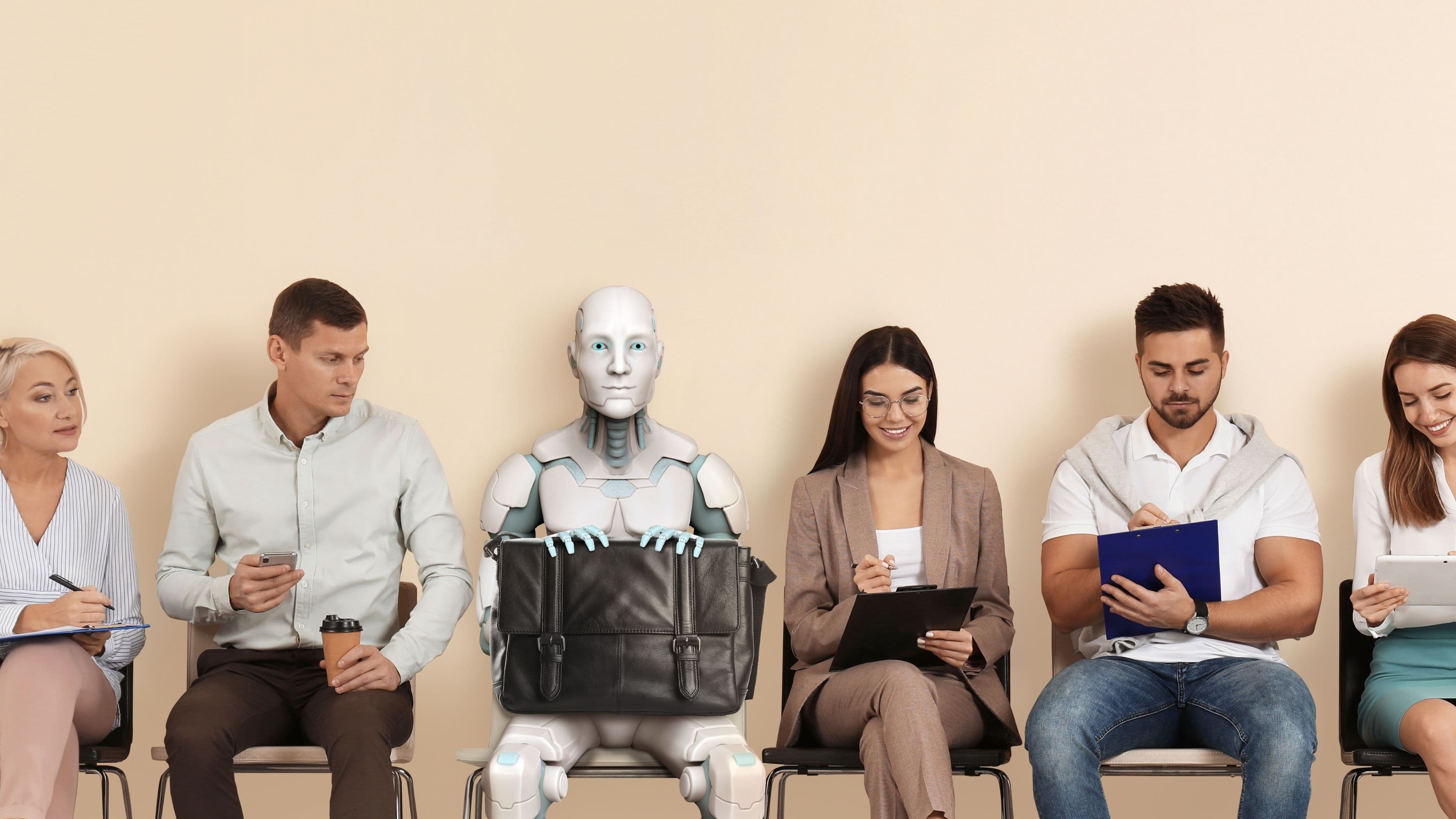
Economists and labor researchers studying AI's actual employment effects have consistently found a pattern that diverges from the "robots replacing workers" narrative: AI is automating specific tasks within jobs far more than it's eliminating entire occupations. A customer service role doesn't vanish because a chatbot handles simple, repetitive questions, it shifts, with the human increasingly handling the more complex, emotionally nuanced, or ambiguous cases the AI can't reliably resolve on its own.
This task-level automation is happening across a much wider range of jobs than the ones typically discussed in AI coverage, showing up in scheduling, data entry, first-draft writing, basic research summarization, and routine coding tasks across industries from law to marketing to software development. The jobs themselves are still there; what's inside them has started to look different.
Why It Matters
This distinction between task automation and job elimination matters because it changes what workers and employers should actually be preparing for. If entire job categories were disappearing wholesale, the appropriate response would be retraining for a completely different career path. But if it's specific tasks within existing jobs shifting, the more relevant skill becomes learning to work effectively alongside AI tools within your current field, understanding what they do well, what they get wrong, and how to direct and verify their output.
Research from institutions studying labor market trends, including analysis published by the McKinsey Global Institute and the Brookings Institution, has generally supported this task-level framing, finding that while a meaningful share of work activities across many occupations are technically automatable with current AI capability, full occupational displacement remains far less common than task-level change.
Real-World Examples
Consider paralegals and legal researchers. AI tools can now draft initial summaries of case law and flag relevant precedents significantly faster than manual research, but the judgment calls about which precedents actually matter for a specific case, how to frame an argument, and how to communicate with a client remain firmly human tasks. The job hasn't disappeared, but the daily task mix has shifted meaningfully toward review, judgment, and client interaction, and away from manual document search.
Marketing and content roles show a similar pattern. AI tools can generate first drafts of copy, summarize competitor research, and produce basic design variations quickly, but positioning strategy, brand voice consistency, and understanding what will actually resonate with a specific audience still require human judgment that current AI systems don't reliably replicate. The role has shifted toward editing, strategy, and oversight, rather than being eliminated.
Which Jobs Are More and Less Affected
Roles built almost entirely around a single, well-defined, repetitive task, certain types of data entry or basic transcription, for example, face more direct pressure toward automation, since there's less complex human judgment embedded in the work to begin with. Roles that combine routine tasks with judgment, relationship management, physical dexterity, or navigating ambiguous, non-standardized situations tend to see task-level shifts rather than wholesale replacement, since current AI systems remain notably weaker at these more context-dependent, less standardized aspects of work.
This is part of why AI's employment impact has looked so different across sectors. Manufacturing roles requiring physical dexterity in unpredictable environments have generally seen less disruption than office roles built around information processing and pattern-based tasks, since current AI capability maps much more directly onto the latter.
Risks and Limitations of This More Reassuring Framing
It's worth being honest that "tasks shift, jobs mostly remain" isn't a universally comforting conclusion for everyone. Task automation still reduces the total amount of human labor needed for a given output, which can mean slower hiring growth within affected roles even without direct layoffs, a real economic effect even if it doesn't show up as a dramatic headline. Workers in roles with a higher concentration of automatable tasks may also face real pressure to adapt their skill set within their existing field faster than they would have otherwise, and that transition isn't free of friction or disruption, even if the job title itself survives.
There's also genuine uncertainty about how this pattern holds as AI capability continues to improve. Current research reflects the technology's present capabilities, and predictions about future task automation carry real uncertainty that shouldn't be presented as settled fact.
What to Watch Next
Labor market researchers are increasingly tracking task-level changes within occupations rather than relying solely on broad employment numbers by job category, since the more granular view captures what's actually happening more accurately. Watching how wages shift within occupations experiencing significant task automation, rather than just watching total employment numbers in those occupations, will likely offer a clearer signal of AI's real economic impact going forward than headline job-loss figures alone.
FAQ
Does this mean my job is safe from AI entirely? Not necessarily safe from change, but the more accurate framing is that most jobs are more likely to be reshaped than eliminated outright, at least based on current AI capability and labor market research. The specific tasks within your role are more likely to shift than the role itself to disappear.
Which skills are becoming more valuable as AI automates certain tasks? Judgment, verification of AI output, complex communication, and navigating ambiguous or non-standardized situations are increasingly valuable, since these remain areas where current AI systems are notably less reliable than experienced humans.
Is it true that AI has already caused significant job losses across the economy? Broad economic data has not shown AI as the dominant driver of overall job losses to date, though it has contributed to task-level shifts and, in some sectors, slower hiring growth. Attributing specific layoffs directly to AI is often more complicated than headlines suggest, since multiple economic factors are usually at play simultaneously.
Outro
The AI and employment story that actually holds up under research is less cinematic than mass job elimination, but it's arguably more useful to understand: your job is more likely to change shape around you than disappear outright, and the more relevant question isn't whether your occupation will survive, it's which of your daily tasks are shifting, and how quickly you can adapt to working alongside the tools handling them.
📚 Sources
McKinsey Global Institute – Generative AI and the Future of Work in America. https://www.mckinsey.com/mgi/our-research
Brookings Institution – Generative AI, the American Worker, and the Future of Work. https://www.brookings.edu/topic/labor-and-employment/