It's not a coincidence, and it's not really about optics. The reason these companies are placing large, quiet bets on nuclear comes down to a collision of two realities: the electricity demands of modern computing are growing faster than most people realize, and the clean energy sources that were supposed to meet that demand have a reliability problem that nuclear doesn't.
The Data Center Power Problem Nobody Talks About Enough
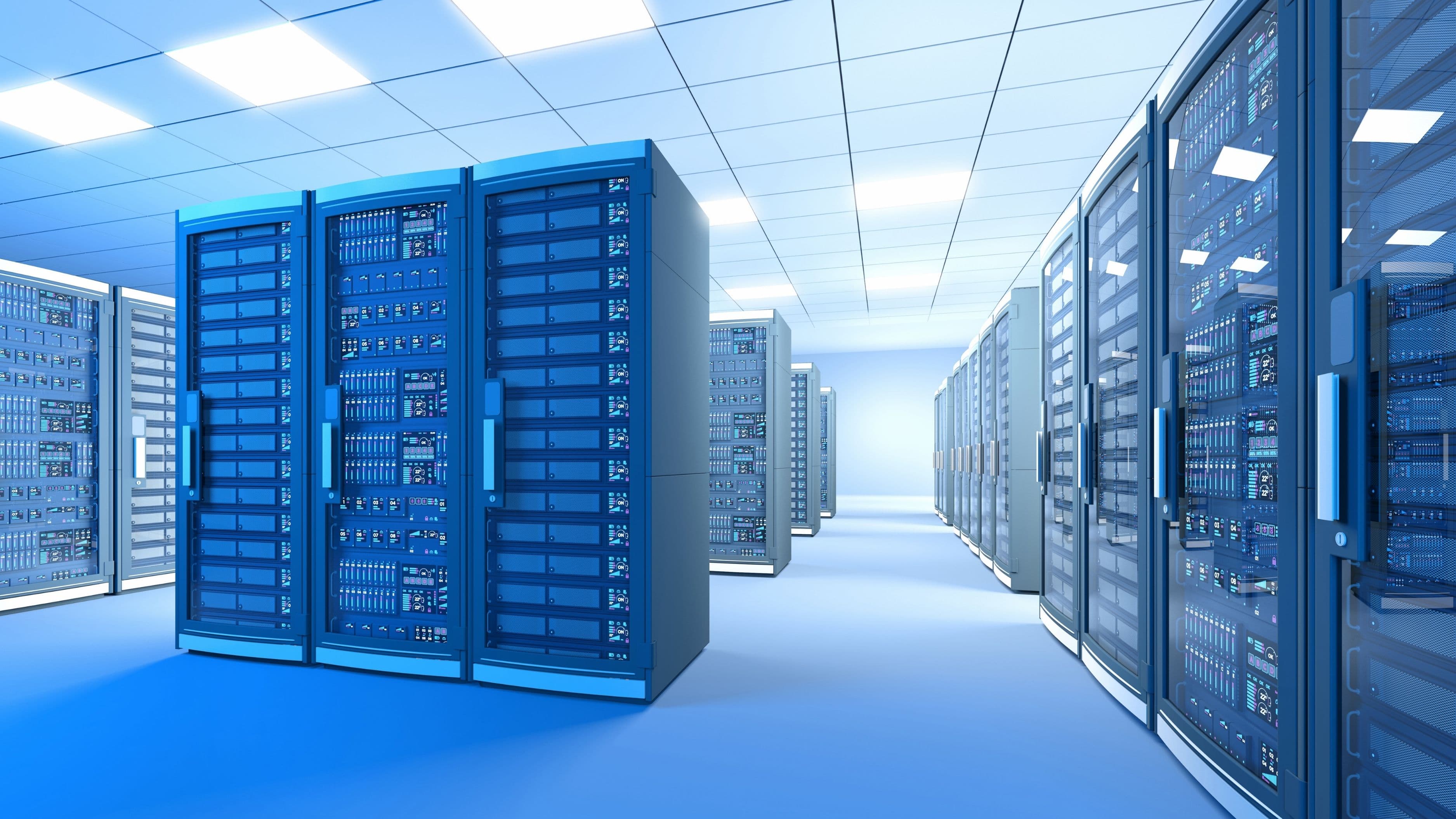
To understand why tech companies care about nuclear, you have to understand what running the internet actually costs in electricity terms. A single large-scale data center can consume anywhere from 20 to 100 megawatts of power continuously – roughly the equivalent of powering 15,000 to 75,000 average American homes. And data center construction is accelerating, not slowing down.
The driver of that acceleration is the rapid expansion of computing workloads – particularly the kind of dense, parallel computation that powers modern AI training and inference. Training a large AI model can consume more electricity than a small town uses in a month. Running that model at scale, handling millions of requests per day, requires sustained, uninterrupted power at enormous volume. When you're Google or Microsoft or Amazon, you're not talking about one data center. You're talking about hundreds of them, distributed globally, running continuously.
The IEA projected in 2024 that data centers could account for more than 4% of global electricity consumption by 2026 – up from around 1–2% just a few years prior. For companies that have also made very public commitments to running on 100% clean energy, that's a significant challenge. Wind and solar are intermittent by nature. The sun goes down. The wind doesn't always blow. Meeting a 24/7 electricity demand with sources that generate power only part of the time requires either massive battery storage infrastructure (expensive, not yet at scale) or a reliable baseload source that runs regardless of weather conditions.
Nuclear runs continuously. It produces no direct carbon emissions. And a single modern reactor can power a significant portion of a data center's needs for decades. For companies trying to solve a very specific equation – massive clean power, always on – nuclear solves it in a way that wind and solar alone can't.
The Deals That Have Already Happened
The investments aren't speculative anymore. They're signed contracts and announced partnerships with real money behind them.
Microsoft made perhaps the most talked-about move in late 2023 when it signed a 20-year power purchase agreement with Constellation Energy to restart Unit 1 of the Three Mile Island nuclear plant in Pennsylvania – the same facility that housed the 1979 accident, though in a separate, unaffected reactor. The deal, valued at several hundred million dollars, is designed specifically to provide carbon-free baseload power for Microsoft's data center operations. Restarting a shuttered nuclear plant is an unusual and capital-intensive move, which signals how seriously Microsoft is treating its power supply problem.
Google signed a first-of-its-kind agreement with Kairos Power in 2024 to purchase electricity from a fleet of small modular reactors – a newer form of nuclear technology – with the first reactors targeted for operation by 2030 and additional capacity planned through 2035.
Amazon, through its AWS subsidiary, made investments in X-energy, a company developing advanced reactor designs, and has also entered agreements to support nuclear development at existing facilities. Meta has been more exploratory, issuing a request for proposals from nuclear developers in early 2024 to supply up to 4 gigawatts of new nuclear capacity for its future infrastructure.
These are not small gestures. Power purchase agreements of this scale represent commitments stretching 15–20 years and require genuine confidence that the technology will deliver. The fact that multiple major tech companies reached similar conclusions independently, within a short window of time, is itself significant.
Why Small Modular Reactors Are Getting So Much Attention
A recurring theme in these deals is "small modular reactors," or SMRs – and it's worth understanding what those actually are and why they're attracting this level of investment now.
Traditional nuclear power plants are enormous, expensive, and slow to build. A full-scale reactor takes a decade or more to plan, license, construct, and commission, and costs can run into the tens of billions of dollars. The economics have been challenging enough that very few new large reactors have been built in the United States in recent decades. SMRs offer a different approach: smaller reactors, designed to be factory-manufactured in standardized units and assembled on-site, with the goal of being faster to deploy, less expensive per unit, and more flexible in where they can be located.
The "modular" part is key. The idea is that instead of building one massive custom reactor over fifteen years, you build ten standardized smaller reactors over five, adding capacity incrementally as demand grows. For a tech company expanding data center infrastructure in phases, that flexibility is appealing in ways that a single massive reactor isn't.
SMRs are not yet widely operational – most designs are still in licensing and development phases. But regulators in the U.S., Canada, and the UK are actively working through approval processes for multiple SMR designs, and the first commercial deployments are expected in the late 2020s and early 2030s. The tech sector's investment is partly a bet that those deployments will happen on schedule and at promised cost – a bet that carries real risk, since nuclear projects have a historical tendency toward delays and cost overruns.
The Clean Energy Commitment Problem
There's a tension worth naming honestly here. The same companies investing in nuclear have made sweeping public commitments to 100% renewable energy, with timelines ranging from 2025 to 2030 to "net zero by 2040." Nuclear is not traditionally classified as "renewable" – it uses a fuel source (uranium) that is finite, even if extraordinarily long-lasting. This creates a definitional awkwardness that these companies are navigating in different ways.
The cleaner framing that's emerged is "24/7 carbon-free energy" – the idea that what matters is not just the total volume of clean energy you procure on an annual basis, but whether you're actually running on clean power at every hour of the day. Wind and solar can satisfy annual clean energy accounting without satisfying hourly clean energy accounting, because the times they generate power don't always match the times you need it. Nuclear satisfies both.
This reframing is deliberate and reflects a more honest accounting of what clean energy actually means for organizations with continuous power demands. It's also a signal that the prior commitments, framed around "renewable" energy specifically, may not age as cleanly as their authors hoped. The goalposts haven't moved so much as the playing field has gotten harder to ignore.
What This Means Beyond the Tech Sector
The tech sector's move toward nuclear has implications that extend well past data centers and power purchase agreements.
One is financing. Nuclear projects are expensive, and they've historically struggled to attract private capital because the upfront costs are high, the timelines are long, and the regulatory environment is complex. When Google and Microsoft sign 20-year purchase agreements with nuclear operators, they provide the kind of long-term revenue certainty that makes financing a nuclear project viable for investors who might otherwise pass. Tech companies are, in effect, de-risking nuclear investment at scale – which could accelerate the deployment of new capacity more broadly.
Another is the political and cultural signal. Nuclear power has carried significant public skepticism since Chernobyl and Three Mile Island, and that skepticism shaped energy policy in many countries for decades. When companies with strong reputations for forward-thinking technology visibly align themselves with nuclear as a serious climate solution, it subtly shifts the conversation. It doesn't erase the safety concerns that have historically driven opposition, but it does reframe nuclear as a pragmatic tool rather than a last resort.
There's also a geopolitical dimension. Uranium supply chains, reactor technology exports, and energy independence are all areas where the nuclear industry intersects with national security. As the U.S. and allied governments look for ways to reduce dependence on fossil fuel supply chains and compete with China's aggressive nuclear build-out (China currently has more reactors under construction than the rest of the world combined), private sector investment in domestic nuclear capacity is likely to be welcomed and potentially supported through policy mechanisms.
The Honest Uncertainty
None of this is a sure thing, and it's worth holding the optimism with some realism.
SMR technology has not yet been proven at commercial scale. The cost projections and deployment timelines that these deals are built on rest on assumptions about manufacturing efficiency and regulatory speed that may not hold. The history of nuclear projects – even well-funded, well-managed ones – includes plenty of examples of delays measured in years and cost overruns measured in billions. The companies signing these agreements know that, which is why they're structuring them with long time horizons and multiple contingencies.
The other open question is whether nuclear capacity can scale fast enough to matter within the timeframes that data center expansion requires. Power demand is growing now. New nuclear capacity won't be online until the late 2020s at the earliest, and full build-out of SMR fleets takes longer still. The gap between current demand and future supply will have to be bridged somehow – and the answer for most companies is, for now, still a mix of renewables, natural gas, and grid power of varying cleanliness.
What's clear is that the calculation has changed. A sector that once treated energy as an infrastructure problem to outsource to utility companies is now treating it as a strategic asset worth owning, shaping, and investing in directly. That's a meaningful shift – and nuclear is at the center of it.
FAQ
Does nuclear energy actually count as "clean" energy? It depends on the definition. Nuclear produces no direct carbon emissions during operation, and lifecycle emissions analyses consistently place it among the lowest-carbon energy sources available – comparable to wind and solar. It is not typically classified as "renewable" because it uses uranium fuel, which is finite. Most climate scientists and energy analysts include nuclear in serious decarbonization scenarios, regardless of the renewable classification debate.
What happened at Three Mile Island and why is Microsoft restarting it? The 1979 Three Mile Island accident involved Unit 2 of the plant, which was damaged and permanently shut down. Microsoft's deal is with Unit 1, which operated safely until 2019, when it was shut down for economic rather than safety reasons. The restart involves the functioning unit only, and has gone through updated regulatory review. The two units are physically separate.
Are small modular reactors actually safer than traditional reactors? Most SMR designs incorporate passive safety systems that reduce the risk of the kind of failures that caused historical accidents. They're also smaller, which limits the potential scale of any incident. That said, no SMR design has operated at commercial scale long enough to have a real-world safety track record. Regulatory agencies evaluate each design individually through detailed licensing processes.
Why don't tech companies just build more solar and battery storage instead? They are doing that too – it's not either/or. But the economics and logistics of providing 24/7 power purely from solar plus storage at data center scale are significantly more challenging than they appear on paper. The battery capacity required to smooth out multi-day low-solar periods is expensive, land-intensive, and relies heavily on mineral supply chains with their own sustainability concerns. Nuclear provides a simpler path to continuous clean power.
Which nuclear startups are attracting the most investment right now? Kairos Power (partnered with Google), X-energy (backed by Amazon), TerraPower (backed by Bill Gates and supported by the U.S. Department of Energy), and Commonwealth Fusion Systems are among the most-funded companies developing next-generation nuclear technology. Each is pursuing a somewhat different reactor design and fuel approach.
📚 Sources
IEA – Electricity 2024: Analysis and Forecast to 2026: https://www.iea.org/reports/electricity-2024
Microsoft – Three Mile Island Power Agreement Announcement: https://blogs.microsoft.com/on-the-issues/2023/09/20/nuclear-energy-agreement-three-mile-island/
Google – Kairos Power Nuclear Agreement: https://blog.google/outreach-initiatives/sustainability/google-kairos-power-nuclear-energy-agreement/
Amazon – X-energy Investment and Nuclear Strategy: https://www.aboutamazon.com/news/sustainability/amazon-nuclear-small-modular-reactor-x-energy
MIT Energy Initiative – The Future of Nuclear Energy in a Carbon-Constrained World: https://energy.mit.edu/research/future-nuclear-energy-carbon-constrained-world/