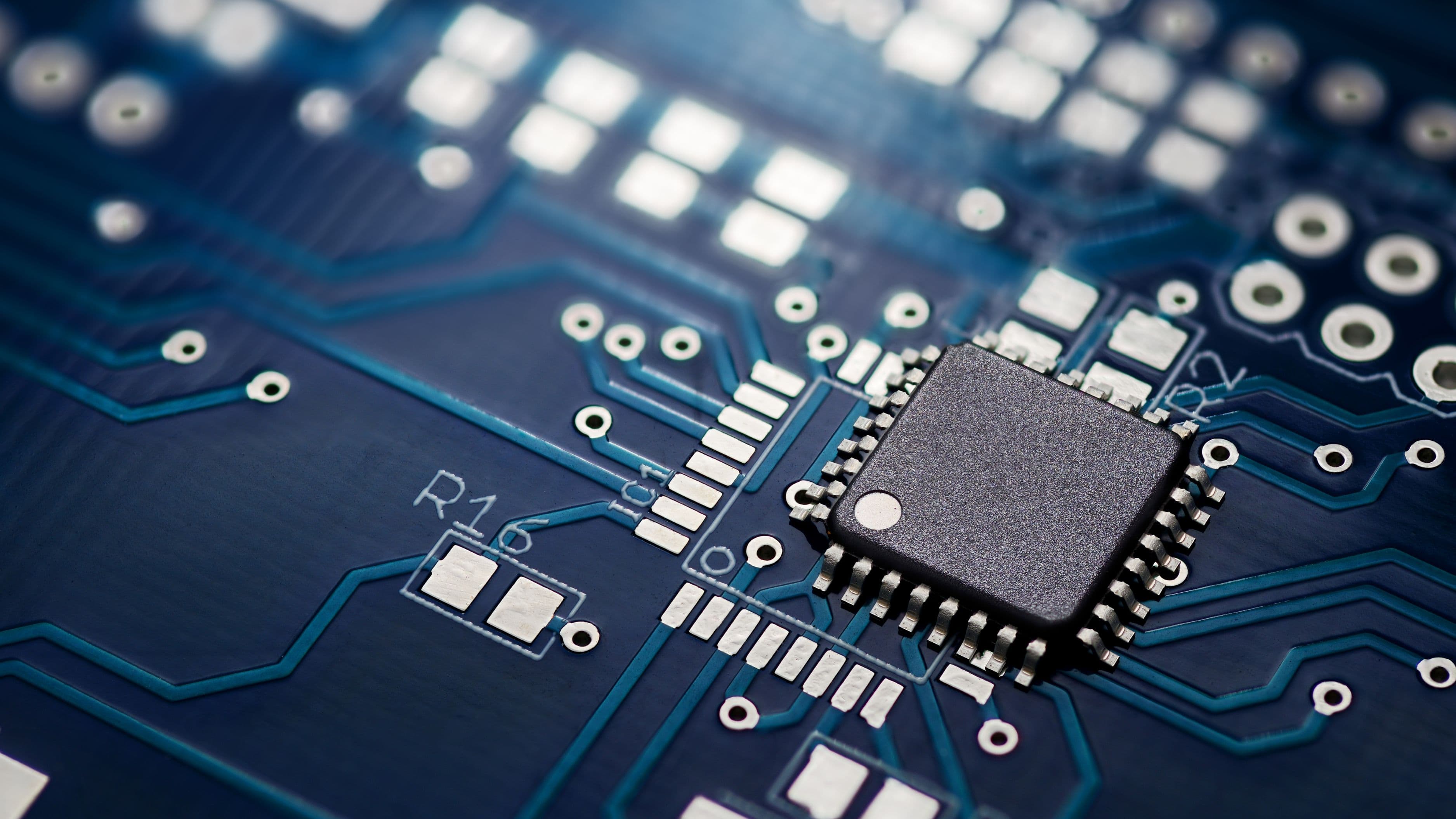
Apple, Google, Amazon, Microsoft, Meta, Tesla, and a growing list of others have all invested heavily in designing chips in-house. The reasons aren't identical across every company, but they share a common thread: buying off-the-shelf hardware from someone else means accepting someone else's trade-offs. And at the scale these companies operate, those trade-offs are increasingly unacceptable.
The Limits of General-Purpose Hardware
The chip that powered the PC revolution – and most of what came after – was designed to be good at everything. A general-purpose CPU can run a word processor, a web browser, a database, and a video game. That flexibility is its strength. But flexibility has a cost: a chip optimized for everything is rarely optimal for any one thing.
For most businesses, that's fine. The overhead is manageable and the convenience of buying standard hardware is worth it. But for companies running workloads at massive scale – billions of search queries, millions of hours of video processing, or continuous training of enormous AI models – even small inefficiencies multiply into enormous costs. A chip that's 30% less efficient than it could be for your specific workload is, at sufficient scale, a serious competitive and financial liability.
This is the core economic logic behind custom silicon. If you can design a chip precisely for what you actually do – and only that – you can eliminate the overhead built into general-purpose designs and extract significantly better performance per watt, per dollar, and per rack unit of data center space.
Apple Showed Everyone It Was Possible
Apple's transition to its own chips is the most visible and commercially successful example of what's possible. For years, Apple used Intel processors in its Macs, the same chips you'd find in any Windows laptop. Then in 2020, it released the M1 – a chip it designed itself, built on ARM architecture – and the results were jarring. The M1 matched or outperformed Intel's high-end laptop chips while using a fraction of the power. MacBooks running M1 lasted significantly longer on a charge than comparable Intel machines, and they didn't need active cooling fans in thinner designs.
The reason wasn't magic. Apple had spent years designing its own chips for the iPhone and iPad, and it understood exactly how its software used hardware. The M1 was designed in tight co-ordination with macOS, which meant the chip's architecture could optimize for the specific things Apple's operating system and applications actually do. Intel's chips had to serve millions of different customers with millions of different workloads. Apple's chip had one customer – Apple – and that specificity paid off enormously.
The M-series chips that followed have continued to extend that lead, and the competitive pressure they created on Intel was significant. Apple's example demonstrated to the broader industry that in-house silicon wasn't just a cost-saving measure – it could be a genuine product advantage.
Google's TPUs and the AI Hardware Problem
Google started designing its own chips for a different reason: it needed hardware that didn't exist yet. In the early 2010s, Google was running neural networks at a scale that no available commercial hardware could support efficiently. GPUs were being repurposed for deep learning, but they were designed for graphics rendering – the fit was good but not perfect. Google needed something purpose-built.
The result was the Tensor Processing Unit, or TPU. The first generation was deployed internally in 2015, before Google publicly acknowledged its existence. It was designed from scratch to accelerate the specific matrix multiplication operations at the heart of neural network training and inference, and it did so far more efficiently than GPUs could manage for those workloads.
By designing its own AI hardware, Google gained two things: lower operating costs for its AI infrastructure, and the ability to move faster than competitors who were waiting on NVIDIA's roadmap. When you control your own chip design, you can co-design the hardware and software together, iterating on both in ways that aren't possible when the hardware comes from a third party. Google has now released multiple generations of TPUs, each tailored to the evolving demands of its AI workloads.
Amazon's Infrastructure Play
Amazon's motivation is rooted in the economics of running the world's largest cloud computing business. AWS is a razor-thin-margin business at scale – every efficiency gain translates directly into profit or competitive pricing. For years, AWS relied heavily on Intel CPUs to power its server fleet, and that dependency was costly.
In 2018, Amazon introduced Graviton, an ARM-based processor designed in-house for its cloud servers. The pitch to AWS customers was straightforward: run your workloads on Graviton instances and get better price-to-performance than Intel-based instances. By the third generation, Graviton3, Amazon was claiming up to 25% better performance and 60% lower energy use compared to equivalent x86 instances for certain workloads. Those aren't small numbers when you're operating at AWS's scale.
Amazon also developed Trainium (for AI training) and Inferentia (for AI inference) – chips designed specifically for machine learning workloads. These sit alongside Graviton as part of a broader strategy to reduce AWS's dependency on third-party chips and give it direct control over its hardware roadmap.
The pattern is consistent across all of these companies: at sufficient scale, building your own silicon stops being an R&D expense and starts looking like a sensible long-term investment.
The NVIDIA Dependency Problem
One factor accelerating the custom chip race is a shared anxiety about over-reliance on NVIDIA. NVIDIA's GPUs have become the de facto standard for AI training, and the company's dominance has created a bottleneck. Demand for its H100 and A100 chips has vastly outpaced supply in recent years, with waiting lists stretching months and prices climbing steeply on the secondary market. Companies building AI products have found themselves constrained by the availability and cost of hardware they don't control.
That dependency is a strategic vulnerability. If your product roadmap depends on chips you can only buy from one supplier, and that supplier can't keep up with demand, your ability to scale is limited by factors entirely outside your control. Building your own alternative – even one that isn't as capable as NVIDIA's best – reduces that vulnerability and gives you negotiating leverage.
Microsoft has invested in a custom AI chip called Maia 100, announced in 2023, designed to handle AI inference workloads within its Azure cloud. Meta has developed MTIA (Meta Training and Inference Accelerator) for its recommendation systems and AI infrastructure. Neither is positioned as a direct replacement for NVIDIA GPUs in all scenarios, but both reduce reliance on a single external supplier for critical workloads.
The Software Lock-In You Don't See
There's another layer to this story that gets less attention: software ecosystems. NVIDIA doesn't just sell chips – it sells CUDA, the programming framework that runs on those chips. Over the past 15 years, the AI research community has built an enormous body of code, tooling, and institutional knowledge around CUDA. It's deeply embedded in how AI models are developed and deployed.
That software lock-in is arguably as significant as the hardware dependency. Even if a competitor builds a chip that matches NVIDIA's raw performance, it faces the challenge of convincing developers to rewrite or port their code to a new programming model. This is a real barrier, and it's one reason why even well-funded alternatives to NVIDIA have struggled to gain traction.
Custom chips developed by large companies for internal use sidestep this problem somewhat, because they control both the hardware and the software stack running on it. Google's TPUs run with XLA, a compiler it developed and controls. Apple's chips run with software Apple writes. This co-design of hardware and software is part of what makes custom silicon so powerful – and why the model of buying chips and software from the same third-party vendor is starting to look like a constraint rather than a convenience.
What This Means for Intel and AMD
The rise of custom silicon is genuinely disruptive to the established chip industry. Intel's struggles over the past decade aren't entirely explained by manufacturing delays and process node problems – they're also a reflection of its largest customers increasingly designing their way out of Intel's product roadmap. Apple left entirely. Amazon, Google, and Microsoft are running significant portions of their infrastructure on their own chips. That's a substantial chunk of enterprise hardware spending that no longer flows to Intel.
AMD has fared better, partly because its competitive x86 chips gave cloud providers a viable alternative to Intel before custom silicon matured, and partly because its GPU business has benefited from the same AI hardware demand that's driven NVIDIA's growth. But AMD faces the same long-term dynamic: its biggest customers have the resources and incentive to eventually reduce their dependency on any external chip supplier.
NVIDIA's position is more complicated. Its dominance in AI training gives it unusual leverage, and the CUDA ecosystem creates real switching costs. But even NVIDIA is watching its largest customers develop in-house alternatives to its inference chips, which represent a growing share of total AI hardware spending as deployed models outnumber models in training.
The Broader Implication
What's happening here is a reintegration of the technology stack. For decades, the tech industry ran on specialization – chip companies made chips, software companies wrote software, and hardware companies assembled products. Custom silicon is a bet that vertical integration – controlling more of the stack yourself – produces better outcomes than buying commodity components from specialists.
That bet is clearly paying off for the companies that have made it. The question is where it stops. Designing chips requires enormous capital investment, years of engineering expertise, and a manufacturing partner capable of building at leading-edge process nodes (which, in practice, means TSMC or Samsung). Most companies can't afford to play this game. But the ones that can are reshaping the competitive landscape of both the technology industry and the semiconductor industry simultaneously.
The chip, it turns out, is not a commodity. It's where the real competition is happening.
FAQ
Does building custom chips mean these companies no longer buy from Intel or NVIDIA? Not entirely. Custom chips typically handle specific high-volume workloads – AI training, inference, cloud compute – while conventional processors still run plenty of other tasks. Most large tech companies use a mix of in-house and third-party silicon depending on the use case.
Why can't smaller companies do this too? Custom chip design is extraordinarily expensive. Designing a chip at a leading-edge process node costs hundreds of millions of dollars before a single chip is manufactured. Only companies with massive, predictable hardware spending at scale can justify that investment. For most companies, buying off-the-shelf hardware is still the rational choice.
Who actually manufactures these custom chips? Almost all of them are manufactured by TSMC (Taiwan Semiconductor Manufacturing Company), which is the world's dominant contract chip manufacturer. Apple, Google, Amazon, and most others design their chips but outsource fabrication. This means TSMC sits at the center of an enormous amount of the world's most important hardware – a geopolitical fact that hasn't gone unnoticed.
Is this trend related to why chip manufacturing has become a national security concern? Yes, directly. As custom silicon becomes central to AI capability and cloud infrastructure, controlling access to advanced chip manufacturing has become a strategic priority for governments. The US CHIPS Act and export restrictions on advanced chips to China are both downstream of the same recognition: chips are now critical infrastructure, not just consumer electronics components.
The Race Has a Finish Line Nobody Can See
The shift toward custom silicon isn't slowing down. If anything, the urgency is increasing as AI workloads grow faster than general-purpose hardware can keep up with. Every major tech company is somewhere on the spectrum between "buying everything from third parties" and "designing everything in-house," and most are moving toward the latter.
The companies that get this right will have lower costs, better performance, and less dependency on suppliers they can't control. The ones that don't will increasingly find themselves limited by someone else's hardware roadmap. In a world where compute is competitive advantage, that's not a position anyone wants to be in.
📚 Sources
Gwennap, L. (2021). Arm vs. x86: The battle for the data center. Microprocessor Report – https://www.linleygroup.com/mpr/article.php?id=12444
Google. (2023). TPU v4: An optically reconfigurable supercomputer for machine learning with hardware support for embeddings. Google Research – https://arxiv.org/abs/2304.01433
Amazon Web Services. (2023). AWS Graviton3 processors. AWS – https://aws.amazon.com/ec2/graviton/
Apple. (2020). Apple unleashes M1. Apple Newsroom – https://www.apple.com/newsroom/2020/11/apple-unleashes-m1/
Microsoft. (2023). Microsoft ignite: Maia AI accelerator and Cobalt CPU. Microsoft Blog – https://blogs.microsoft.com/blog/2023/11/15/microsoft-ignite-2023-ai-transformation-and-the-technology-driving-it/
Dettloff, D. (2024). Meta's in-house AI chip MTIA. Meta Engineering Blog – https://engineering.fb.com/2023/05/18/production-engineering/meta-training-inference-accelerator-meta-mtia/
Kanellos, M. (2023). Why the CHIPS Act matters. Brookings Institution – https://www.brookings.edu/articles/the-chips-and-science-act-heres-what-it-does/