Understanding what makes it different – and why it's so much harder to defend against – is genuinely useful in a world where this type of attack is becoming more common, not less.
Regular Phishing: The Digital Version of Spam
To understand spear phishing, it helps to start with what regular phishing actually is. Traditional phishing is a volume game. An attacker sends the same message to hundreds of thousands or millions of people simultaneously, impersonating a trusted brand – a bank, a delivery service, a government agency, a major tech platform. The email typically creates urgency ("your account will be suspended"), requests that you click a link or provide credentials, and hopes that a small percentage of recipients fall for it.
The approach works because of sheer scale. Even if only one-tenth of one percent of recipients are fooled, that's still thousands of compromised accounts from a single campaign. The messages are generic by design – they have to be, because they're not targeting anyone specifically. This is also what makes them relatively detectable: generic messages have generic tells. Odd sender addresses, grammatical errors, logos that don't quite look right, links that don't match the domain they claim to be from. Once you know what to look for, standard phishing emails often announce themselves fairly obviously.
What Spear Phishing Actually Looks Like
Spear phishing flips this model completely. Instead of casting the widest possible net, attackers choose a specific target – sometimes an individual, sometimes a small group – and invest significant time and effort into making the attack look completely legitimate to that person. The name comes from the idea of fishing with a spear rather than a net: precise, targeted, and far more likely to land what it's aiming at.
A spear phishing email might reference your actual name, your job title, a project you're currently working on, your manager's name, or a recent company event you attended. It might appear to come from someone in your professional network, a vendor your company actually uses, or an internal colleague whose email address has been spoofed convincingly. The message might ask you to review a shared document, approve a wire transfer, update your login credentials, or complete what appears to be a routine administrative task. Nothing about it looks obviously wrong – because the attacker has done their homework.
The research phase is where spear phishing begins, and it often requires nothing more sophisticated than a LinkedIn profile, a company website, and some publicly visible social media activity. Modern professionals share an enormous amount of professionally relevant information online – their organizational hierarchy, their projects, their colleagues, their industry affiliations. Attackers aggregate this information to construct messages that are indistinguishable from legitimate communications to the person receiving them.
Why It's So Much More Effective
The effectiveness gap between generic phishing and spear phishing is significant, and it comes down to one core principle: context collapses skepticism. When an email references your actual project, appears to come from someone you recognize by name, uses your company's correct internal terminology, and arrives at a time when you're busy and moving quickly through your inbox – your brain doesn't flag it. Why would it? Everything checks out. The psychological mechanisms that normally trigger caution are disarmed by familiarity and contextual plausibility.
This is not a failure of intelligence or attentiveness. It's a known vulnerability in how human cognition handles trust. We extend trust to things that match our expectations of the world, and a well-researched spear phishing message is specifically engineered to match those expectations exactly. Security researchers studying click rates consistently find that targeted, personalized phishing messages perform dramatically better than generic ones – sometimes achieving click or credential submission rates of 30 to 50 percent even among employees who have received security awareness training.
The attacker's return-on-investment calculation is also different. A spear phishing campaign targeting a specific high-value individual – a CFO, a system administrator, a healthcare executive, a legal professional with access to sensitive information – has a potential payoff large enough to justify days or weeks of preparation. The attack surface is narrow, but the target is chosen precisely because access to their credentials, their systems, or their authority to approve transactions would unlock something significantly valuable.
Who Gets Targeted and Why
Spear phishing targets tend to fall into a few recognizable categories. Executives and financial decision-makers are frequent targets because they have the authority to approve large transactions, and a subset of spear phishing attacks specifically impersonate senior leadership to pressure lower-level employees into initiating wire transfers or purchasing gift cards – a variant sometimes called "business email compromise" or "whale phishing" when the executive themselves is the target.
IT administrators and system administrators are high-value targets because their credentials often provide access to entire organizational environments rather than just individual accounts. A compromised sysadmin account can be the entry point for a network-wide ransomware deployment, data exfiltration, or persistent unauthorized access that goes undetected for months. Healthcare workers, legal professionals, and HR staff are targeted because of the sensitive personal data they handle – patient records, legal strategy, employee personal information – that has both direct monetary value and leverage potential.
Individuals in specific roles who handle vendor payments, payroll processing, or accounts payable are also disproportionately targeted, because attackers understand the specific workflows these roles involve and can craft pretexts that fit naturally into those workflows. "Please update our payment information before the next billing cycle" is a message that an accounts payable coordinator receives variations of regularly in legitimate contexts – which is exactly what makes a spoofed version of it so effective.
The Role of Social Engineering
Spear phishing is ultimately a social engineering attack that happens to use email (or increasingly, SMS – sometimes called "smishing" – or voice calls, called "vishing") as its delivery mechanism. The technical element – the spoofed sender, the malicious link, the credential harvesting page – is secondary to the psychological manipulation. The attacker is exploiting trust, authority, urgency, and familiarity rather than a technical vulnerability in your software.
This is important to understand because it means that technical defenses alone – spam filters, email authentication protocols like DMARC and DKIM, endpoint security software – can't fully solve the problem. These tools catch a meaningful percentage of attempts, but a sufficiently well-crafted spear phishing message can pass through technical filters while still being fraudulent. The human layer of defense remains essential, which is why security awareness training specifically focused on social engineering recognition is a significant investment for organizations that take cybersecurity seriously.
Real-World Consequences
The consequences of successful spear phishing attacks are consistently severe. The 2016 hack of the Democratic National Committee began with a spear phishing email to campaign chairman John Podesta. The 2011 RSA Security breach – which compromised the security tokens used by thousands of organizations worldwide – began with a spear phishing email sent to a small group of employees with an attached Excel file. The 2020 Twitter Bitcoin scam, in which high-profile accounts including Barack Obama, Elon Musk, and Apple were hijacked to promote a cryptocurrency fraud, was initiated through a spear phishing attack on Twitter employees with access to internal administrative tools.
These aren't edge cases – they're representative examples from a long and ongoing pattern. The FBI's Internet Crime Complaint Center consistently reports business email compromise and spear phishing as among the most financially damaging categories of cybercrime, with losses reaching billions of dollars annually across reported cases alone. Unreported cases and indirect costs – incident response, regulatory consequences, reputational damage – extend the true cost significantly further.
How to Protect Yourself
There's no single defense that makes spear phishing impossible, but several practices meaningfully reduce your risk and the potential damage if an attack succeeds.
Verify through a separate channel before acting on any request involving credentials, payments, or sensitive access – especially if the request comes with urgency or arrives through a slightly unusual path. If your "CEO" emails you asking to approve an urgent wire transfer, call the CEO on a known number before doing anything. This one habit stops a large proportion of business email compromise attacks cold.
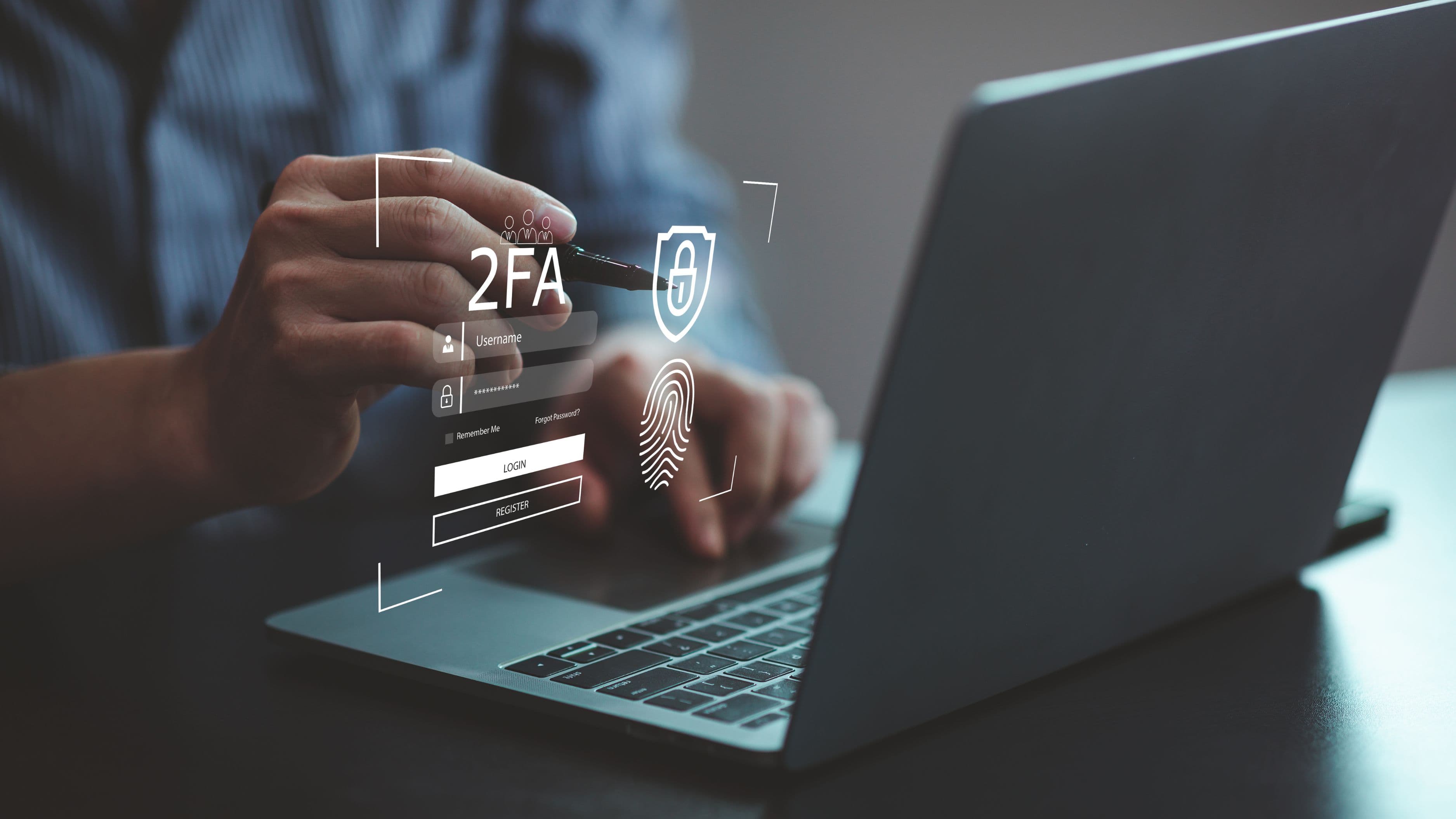
Enable multi-factor authentication on every account that supports it. Even if an attacker successfully captures your username and password through a spoofed login page, MFA means that credential alone isn't enough to access your account. Hardware security keys (like a YubiKey) provide the strongest form of MFA and are phishing-resistant in ways that SMS-based codes are not – an important distinction since sophisticated attackers can intercept SMS codes through real-time phishing proxies.
Be deliberate about what you make publicly available online. Your LinkedIn profile, your company bio, and your social media presence collectively form the research base that spear phishing attackers draw from. This doesn't mean hiding entirely from the internet – but it does mean thinking about the level of operational detail you share publicly about your role, your colleagues, and your current projects.
Slow down with email requests that ask for action. Urgency is a manipulative tool in spear phishing precisely because it short-circuits careful thinking. If an email is pressuring you to act immediately, that pressure itself is worth treating as a signal to pause and verify rather than comply.
The Bigger Picture
Spear phishing works because it meets people where they are – in the middle of a busy workday, operating on trust and context rather than vigilance. The sophistication is less about the technology involved and more about the understanding of human behavior that attackers bring to the design of each attack. The most effective defense matches that sophistication: understanding why these attacks succeed, knowing the specific patterns to watch for, and building habits that insert just enough friction between a suspicious request and an automatic response to catch the attempts that technical filters miss.
FAQ
Is spear phishing the same as whaling? Related but not identical. Whaling is a subset of spear phishing that specifically targets senior executives – "big fish," in the metaphor. All whaling is spear phishing, but not all spear phishing is whaling. Spear phishing encompasses targeted attacks on any specific individual or small group, regardless of their organizational level.
Can spear phishing happen over text message or phone calls? Yes. SMS-based spear phishing is called smishing, and voice-based attacks are called vishing. Both follow the same personalization principle – using specific details about the target to create a convincing pretext. Voice attacks in particular can be disarming because speaking with a real-sounding human activates social trust instincts that email doesn't quite replicate.
How do attackers get the personal details they use in spear phishing? Primarily from open-source intelligence – publicly available information on LinkedIn, company websites, press releases, social media profiles, conference speaker lists, and professional databases. In some cases, attackers also purchase data from previous breaches that includes email addresses, job titles, and organizational details. The research phase rarely requires any hacking – it's mostly information aggregation from public sources.
Will a spam filter protect me from spear phishing? Partially. Email authentication protocols (DMARC, DKIM, SPF) and modern spam filters catch a meaningful percentage of spear phishing attempts, particularly those using spoofed external domains. But sophisticated attacks using lookalike domains, compromised legitimate accounts, or carefully crafted messages designed to pass filter heuristics can still reach inboxes. Technical filters are necessary but not sufficient on their own.
How do I report a spear phishing attempt? Within an organization, report to your IT or security team immediately – including the full email with headers intact if possible. For attacks outside an organizational context, the FBI's Internet Crime Complaint Center (IC3) at ic3.gov accepts reports of cybercrime including phishing. Reporting helps build the pattern data that defenders use to improve detection over time.
📚 Sources
FBI Internet Crime Complaint Center. 2023 Internet Crime Report. https://www.ic3.gov/Media/PDF/AnnualReport/2023_IC3Report.pdf
Proofpoint. 2024 State of the Phish Report. https://www.proofpoint.com/us/resources/threat-reports/state-of-phish
CISA. Phishing Guidance: Stopping the Attack Cycle at Phase One. https://www.cisa.gov/resources-tools/resources/phishing-guidance-stopping-attack-cycle-phase-one
Verizon. 2024 Data Breach Investigations Report. https://www.verizon.com/business/resources/reports/dbir/
SANS Institute. Spear Phishing: Understanding the Threat. https://www.sans.org/white-papers/spear-phishing-understanding-threat-33383/
NIST. Phishing Attack Definition and Overview. https://csrc.nist.gov/glossary/term/phishing
KnowBe4. Spear Phishing vs. Phishing: What's the Difference? https://www.knowbe4.com/phishing/spear-phishing
Cybersecurity & Infrastructure Security Agency. Multi-Factor Authentication. https://www.cisa.gov/MFA
Google. Protecting Against Phishing with Security Keys. https://security.googleblog.com/2019/05/new-research-how-effective-is-basic.html
MIT Technology Review. The DNC Hack Started With a Phishing Email. https://www.technologyreview.com/2016/12/13/5507/the-dnc-hack-started-with-a-phishing-email/