If you've mostly heard the term in passing, it's worth understanding why solid-state batteries are generating this much attention, what's actually different about them, and why – despite years of promises – they still aren't sitting in your phone or car today.
What Makes a Battery "Solid-State" in the First Place
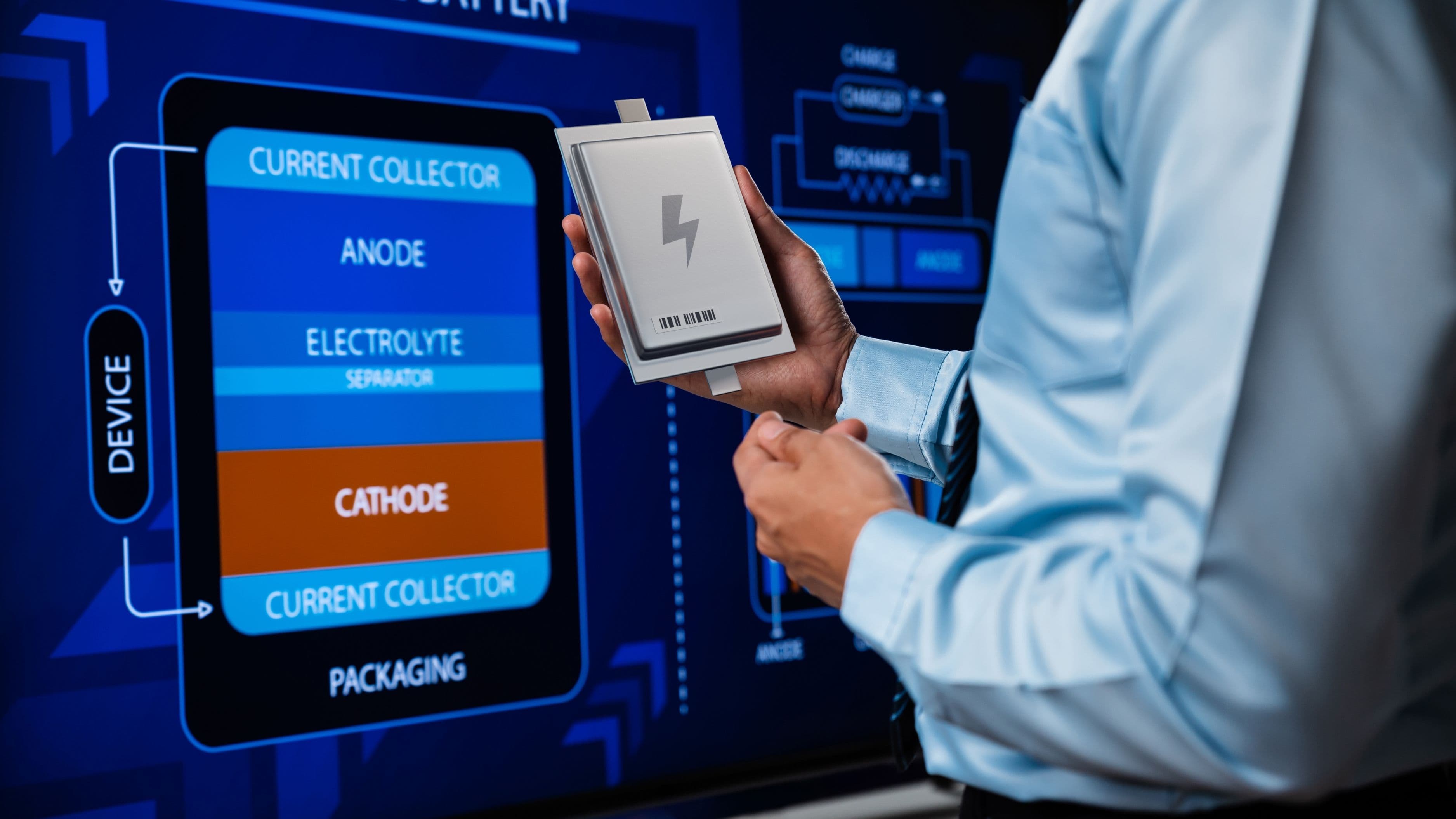
Every lithium-ion battery works by moving lithium ions between two electrodes through a liquid electrolyte, which is essentially the medium that lets the charge flow. Solid-state batteries replace that liquid electrolyte with a solid material, usually a ceramic, glass, or polymer compound. It sounds like a small swap, but it changes almost everything about how the battery behaves.
The liquid electrolyte in a traditional battery is also the main reason lithium-ion cells are flammable. It's a volatile, combustible material, which is why damaged phone batteries and some EV battery packs have made headlines for catching fire. A solid electrolyte removes most of that risk, since there's no easily combustible liquid to leak or ignite in the first place.
Why It Matters Beyond Just Safety
Safety is the headline benefit, but it's far from the only one. Solid electrolytes also allow for higher energy density, meaning more stored power in the same physical size, or the same power in a smaller, lighter package. For EVs specifically, this translates into either significantly longer range without adding weight, or the same range in a lighter, more efficient vehicle.
Charging speed is another major advantage. Several solid-state prototypes have demonstrated charging to 80% capacity in a fraction of the time current EV batteries require, which directly addresses one of the most common complaints holding back broader EV adoption. Longer battery lifespan is a third factor – solid-state cells generally degrade more slowly over repeated charge cycles than liquid-electrolyte batteries, meaning less capacity loss over years of use.
Why It's Taken This Long to Reach the Market
If solid-state batteries are this much better, the obvious question is why they aren't already everywhere. The honest answer is that manufacturing them at scale is genuinely difficult in ways that don't show up in a lab demonstration. Solid electrolytes need to maintain perfect, consistent contact with the electrodes to work efficiently, and any tiny gap or crack that forms during manufacturing or use can dramatically reduce performance or cause the battery to fail.
Mass-producing that level of precision, at the volume automakers and electronics manufacturers need, at a cost that doesn't make the final product wildly expensive, has proven far harder than early lab results suggested. Several companies have hit this exact wall after years of promising commercial timelines, only to push announced release dates back repeatedly.
Who's Actually Leading the Race
Toyota has been one of the most public players in solid-state development, with a stated goal of bringing the technology to production vehicles later this decade, backed by patents suggesting they've made real manufacturing progress. Samsung SDI and QuantumScape, a well-funded American startup backed partly by Volkswagen, have both published testing data showing meaningful improvements in cycle life and charging speed, though both remain in pre-commercial stages.
Chinese battery manufacturers, including CATL, the world's largest EV battery producer, have also entered the race aggressively, given how much is at stake for maintaining dominance in the global EV supply chain. This global competitive pressure is part of why the technology is advancing quickly despite the manufacturing challenges – no major player wants to be the one left behind once someone else cracks large-scale production.
What This Means for Consumers in the Near Term
Realistically, solid-state batteries in mainstream consumer products, particularly EVs, are still likely several years away from widespread availability, even with aggressive corporate timelines. Early commercial applications are more likely to show up first in smaller-scale, higher-margin products – premium EVs, high-end consumer electronics, or specialized applications like medical devices – before the technology becomes affordable and available at broader consumer scale.
In the meantime, current lithium-ion technology continues to improve incrementally, with better energy density, faster charging, and improved safety features, which means the wait for solid-state doesn't mean today's batteries are stagnant.
What to Watch For
Keep an eye on manufacturing partnership announcements rather than just lab performance claims, since production-scale deals with major automakers or electronics companies are a far stronger signal of near-term commercial viability than a promising demo. Also pay attention to pricing signals as pilot production lines come online, since manufacturing cost, not just technical performance, will determine how quickly this technology reaches ordinary consumers rather than staying in premium products only.
What to Avoid Believing
Be skeptical of any announcement claiming solid-state batteries will be "available next year" without a clear, credible manufacturing partnership behind it. This technology has a long history of optimistic timelines that get pushed back once the difficulty of scaled production becomes clear.
Don't assume solid-state automatically means zero fire risk in every scenario. It significantly reduces the risk compared to liquid electrolytes, but "significantly safer" and "completely without risk" are different claims, and some early solid-state designs still involve tradeoffs that manufacturers are actively working through.
FAQ
When will solid-state batteries actually be available in EVs? Most credible industry timelines point toward limited premium vehicle availability later this decade, with broader mainstream availability likely taking additional years beyond that as manufacturing scales and costs come down.
Will solid-state batteries make current EVs obsolete? Not immediately. Current lithium-ion EVs will remain functional and supported for years, and the transition to solid-state will likely happen gradually across new vehicle generations rather than as an abrupt shift.
Are solid-state batteries more expensive than lithium-ion? Currently yes, largely due to the complexity of manufacturing at scale, though costs are expected to decrease significantly as production techniques mature and scale increases.
📚 Sources
U.S. Department of Energy – "Solid-State Battery Research" – https://www.energy.gov/eere/vehicles/solid-state-batteries
MIT Technology Review – "The Race for Solid-State Batteries" – https://www.technologyreview.com/