
A Quick Refresher: What Semiconductors Actually Are
If you already know what a chip is, skip ahead. If you've nodded along to chip shortage coverage without fully understanding what's being shorted, here's the fast version.
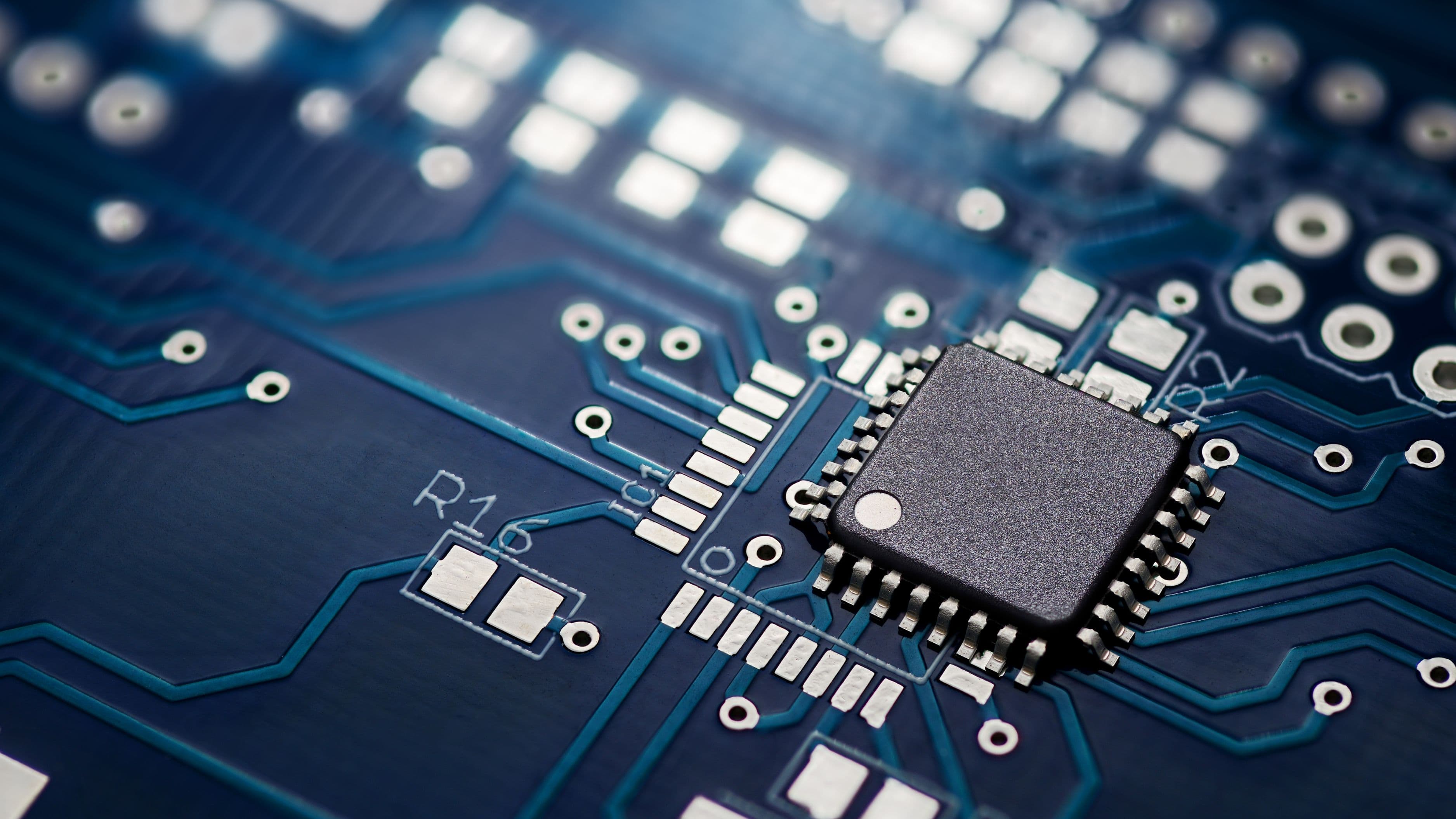
Semiconductors are the foundational components of nearly every electronic device – the tiny slices of silicon etched with billions of microscopic transistors that process and store data. Your smartphone has one. Your laptop has several. Modern cars have anywhere from a few dozen to over 3,000. Medical devices, industrial equipment, satellites, military hardware, data center servers, and the infrastructure running the internet all depend on them. There is essentially no significant technology sector that doesn't.
What makes chips complicated to produce is the manufacturing process itself. Building a modern chip requires etching features measured in nanometers – billionths of a meter – onto silicon wafers using a process so precise that the machines capable of doing it at the leading edge are made by exactly one company in the world (ASML, based in the Netherlands). The factories (called fabs) cost $10–$20 billion to build, take three to five years to come online, and require years of operational tuning before they run efficiently. You cannot just spin up chip production the way you'd ramp up a factory making widgets.
What Caused the First Shortage and How It Resolved
The 2020–2022 chip shortage was triggered by a collision of events. COVID-19 disrupted factory operations across Southeast Asia. Demand for consumer electronics – laptops, tablets, webcams, home networking equipment – surged as the world moved online almost overnight. Automakers, caught off guard, cancelled chip orders early in the pandemic assuming demand would fall, then scrambled to reorder when car sales rebounded faster than expected. At the same time, a fire at a Renesas semiconductor facility in Japan and a drought in Taiwan (which affects the ultrapure water needed for chip fabrication) added supply-side pressure.
The resolution came gradually through a combination of factors: demand for consumer electronics cooled as the pandemic era ended, new capacity gradually came online, and companies rebuilt inventory buffers they'd let run lean. By late 2022 and into 2023, some chip categories were actually in oversupply, and memory chip prices dropped sharply. It looked, for a moment, like the industry had stabilized.
That stabilization was real but incomplete. The shortage in commodity chips eased. The shortage in advanced chips did not – and the demand picture was about to change dramatically.
The New Driver: AI's Insatiable Appetite for Compute
The current pressure on chip supply is being driven primarily by one thing: the explosive, infrastructure-scale demand for AI computing. Training large language models and running inference at scale requires enormous numbers of specialized processors – particularly high-end GPUs and custom AI accelerators. NVIDIA's H100 and H200 chips became so coveted that tech companies were publicly discussing their allocation numbers like they were announcing earnings. Microsoft, Google, Meta, and Amazon have been ordering tens of billions of dollars worth of AI chips annually, and they still aren't getting enough fast enough.
This is a fundamentally different demand dynamic than the 2021 shortage. Consumer electronics demand fluctuates with economic cycles and can slow down. AI infrastructure buildout is being treated by major tech companies and governments as a strategic necessity – the kind of investment where slowing down means falling behind in a race with geopolitical stakes. That means the demand signal is unusually durable and unusually large. NVIDIA's revenue from its data center segment grew from around $15 billion in fiscal 2023 to over $47 billion in fiscal 2024. The trajectory hasn't flattened.
The bottleneck isn't just GPUs, either. Building AI data centers at scale requires networking chips (to move data between processors quickly), memory chips with high bandwidth (HBM, or High Bandwidth Memory), advanced packaging technologies that stack chips in new configurations, and sophisticated cooling systems that themselves contain semiconductors. The entire supply chain around AI compute is under pressure simultaneously.
Taiwan: The Concentration Problem That Won't Go Away
Here's the geographic fact that underlies most of the current anxiety: Taiwan Semiconductor Manufacturing Company (TSMC) manufactures approximately 90% of the world's most advanced chips. Not 40%. Not 60%. Around 90%. Every leading-edge chip from Apple, NVIDIA, AMD, Qualcomm, and most other fabless chip designers flows through a single company on a single island in the Taiwan Strait.
TSMC is genuinely extraordinary at what it does – it has a multi-year lead over its nearest competitor (Samsung) in advanced process nodes, and that lead has been widening rather than narrowing. The company's operational excellence and the depth of its supplier ecosystem in Taiwan make it extraordinarily difficult to replicate quickly. But concentration at this level creates systemic fragility. Any significant disruption to TSMC's operations – a natural disaster, a geopolitical incident, even a major equipment failure – would reverberate through essentially every technology supply chain on earth simultaneously.
This is why the US CHIPS Act (2022) committed $52 billion to domestic semiconductor manufacturing, why the EU has its own European Chips Act, why Japan is subsidizing TSMC fabs on its soil, and why India and the UAE are trying to attract semiconductor investment. Every major economy is trying to reduce its exposure to a single geographic chokepoint – but building the manufacturing capacity, the workforce, and the supplier ecosystems to actually change that picture takes a decade or more. TSMC's Arizona fabs, heavily subsidized by the US government, have faced delays and workforce challenges. The timeline keeps slipping.
Export Controls and the US-China Tech War
The other dimension of the current chip situation is explicitly geopolitical. The US has imposed sweeping export controls on advanced semiconductors and chip-making equipment to China, restricting access to chips like the H100 and A100, and to the ASML extreme ultraviolet (EUV) lithography machines needed to manufacture leading-edge chips. The Netherlands and Japan, under US pressure, have imposed their own export restrictions on chip equipment to China.
The stated rationale is preventing advanced semiconductor technology from being used for military applications. The practical effect is an attempt to maintain a wide capability gap between US-aligned chip producers and China's domestic semiconductor industry. China's leading chip manufacturer, SMIC, is currently limited to producing chips at around the 7nm node – two to three generations behind TSMC's leading edge – partly because it lacks access to EUV equipment.
China's response has been to dramatically accelerate domestic investment in semiconductor manufacturing and design. SMIC has made surprising progress at 7nm using existing deep ultraviolet (DUV) equipment in unconventional configurations. Huawei's Mate 60 Pro, released in 2023, used a domestically produced 7nm chip that surprised many analysts who had assumed China was further behind. China is pouring hundreds of billions of dollars into closing the gap, and while the consensus is that it remains several years behind the leading edge, the rate of progress is faster than Western export control architects had anticipated.
This creates a secondary shortage dynamic: Chinese tech companies that can no longer access the best US-designed chips are buying up whatever advanced chips they can access elsewhere, and they're stockpiling equipment ahead of anticipated future restrictions. That stockpiling behavior pulls additional supply out of the global market.
The Physical Limits of Advanced Manufacturing
There's also a fundamental constraint that gets less attention than the geopolitical drama: making advanced chips is genuinely getting harder in ways that slow supply growth regardless of investment levels.
Moore's Law – the observation that the number of transistors on a chip doubles roughly every two years – has been slowing for over a decade. Getting from one process node to the next now takes longer, costs more, and delivers smaller gains than it once did. The physical engineering challenges of etching features at 3nm and below are immense, and the yield rates (the percentage of chips on a wafer that actually work correctly) at leading-edge nodes are lower, at least initially, which constrains effective output.
ASML's EUV machines, which are essential for leading-edge production, cost approximately $150–$200 million each and take years to manufacture and qualify. ASML can produce somewhere in the range of 40–50 EUV systems per year. That's it. That's the global capacity constraint for producing the most advanced chips, and it cannot be quickly expanded. The supply chain for EUV machines involves components from hundreds of specialized suppliers across multiple countries, each with their own lead times and capacity limits.
Why This Shortage Feels Different
The 2021 shortage was a supply chain disruption – an acute crisis caused by mismatched demand and supply during an unusual external shock. The current pressure is more structural. It's being driven by a durable surge in demand from AI infrastructure, a geographic concentration of manufacturing that governments are trying to change but can't change quickly, an active geopolitical contest over who controls the technology, and the physical difficulty of scaling production at the leading edge.
There's no single policy, investment, or supply chain fix that resolves all of these simultaneously. New TSMC, Samsung, and Intel fabs being built in the US, Japan, Germany, and elsewhere will gradually increase geographic diversification – but most of these fabs won't reach full production until 2026–2028, and they'll take additional years to reach the yield and cost efficiency of established facilities. Meanwhile, demand from AI is accelerating faster than new capacity is coming online.
The result is a sustained period of tight supply for the most advanced chips, pricing power for companies that can produce them, and a geopolitical arms race over the technology that shows no signs of cooling.
What It Means for You
If you're buying consumer electronics in the near term, the effects are relatively mild compared to 2021 – there's no shortage of phones or laptops. The pressure is concentrated at the high end of the compute market. What you're more likely to feel is the downstream effect: cloud services getting more expensive as data center costs rise, AI features being slower to roll out than companies announce, and the price of GPUs remaining elevated if you're building a workstation or home server.
More broadly, the semiconductor situation is shaping technology investment, national industrial policy, and geopolitical relationships in ways that will play out over the next decade. Which companies get access to the most advanced chips, which countries can produce them, and what gets built with them are questions that are being actively contested in ways they weren't five years ago. The chip is small, but the world being built around it isn't.
FAQ
Is this shortage as bad as the 2021–2022 one?
For consumer electronics, no – that market has largely normalized. For high-end AI compute chips (GPUs, AI accelerators), the supply constraint is arguably more persistent because the demand is more durable. Companies can wait out a temporary gadget shortage; they're treating AI compute access as a competitive imperative that they can't afford to deprioritize.
Why can't the US or Europe just build their own chip fabs faster?
Money alone isn't the bottleneck. Building an advanced fab also requires a specialized workforce (process engineers, equipment technicians, materials scientists) that takes years to develop, a dense local supply chain for materials and components, and sustained operational experience before yields reach commercial viability. TSMC's Arizona fabs have been delayed partly for these reasons. The knowledge base is heavily concentrated in Taiwan and South Korea, and it doesn't transfer quickly.
What is ASML and why does it matter so much?
ASML is a Dutch company that makes the lithography machines used to print circuit patterns onto silicon wafers. Its extreme ultraviolet (EUV) machines are the only equipment in the world capable of manufacturing chips at the most advanced process nodes. Without EUV machines, you cannot make leading-edge chips. ASML has a complete monopoly on this technology, which makes it one of the most strategically important companies on earth and a focal point of export control policy.
Will China eventually catch up in chip manufacturing?
Probably in some segments, eventually – but the timeline is uncertain and the leading edge is a moving target. China has made faster-than-expected progress at the 7nm node, but it remains 2–3 generations behind TSMC's leading edge, and the gap at the most advanced nodes (3nm and below) is wider. Whether China can independently develop EUV-equivalent technology, or find ways around the limitation, is one of the defining open questions in tech geopolitics.
Does this affect everyday technology prices?
Indirectly, yes. AI infrastructure costs flow into cloud computing prices, which affect the cost of digital services. High GPU prices affect gaming hardware and workstation costs. Longer term, competition over chip supply affects which features make it into consumer products and on what timeline. The effects are more diffuse than the 2021 shortage but arguably more structurally significant.
📚 Sources
NVIDIA data center revenue growth – NVIDIA Fiscal 2024 Annual Report: https://investor.nvidia.com/financial-information/annual-reports/default.aspx
US CHIPS and Science Act overview – US Department of Commerce: https://www.commerce.gov/chipsact
TSMC global market share in advanced chips – TrendForce: https://www.trendforce.com/research/foundry/
ASML EUV machine cost and production capacity – ASML Investor Relations: https://www.asml.com/en/investors
US export controls on advanced chips to China – Bureau of Industry and Security: https://www.bis.doc.gov/index.php/documents/about-bis/newsroom/press-releases/3299-2023-10-17-bis-press-release-advanced-computing-final-rule
Huawei Mate 60 Pro chip analysis – TechInsights: https://www.techinsights.com/blog/huawei-mate-60-pro-teardown
European Chips Act overview – European Commission: https://commission.europa.eu/strategy-and-policy/priorities-2019-2024/europe-fit-digital-age/european-chips-act_en
TSMC Arizona fab delays and workforce challenges – Reuters: https://www.reuters.com/technology/tsmc-arizona-chip-plant-faces-further-delays-report-2023-07-26/