
So why are they suddenly relevant again? Because the assumption that a smartphone and a cellular network is always enough has been tested – repeatedly and publicly – and a lot of people didn't like the answer they got.
What's Actually Happening
Satellite phone adoption is rising, but the more interesting story is what's happening around the edges of traditional satellite phones: the integration of satellite connectivity directly into consumer devices that already live in your pocket.
Apple's iPhone 14 introduced Emergency SOS via satellite in late 2022, letting users send distress messages and location data from anywhere on Earth, even with zero cellular signal. That feature has since expanded across iPhone models and added new capabilities including satellite-based roadside assistance and, more recently, two-way messaging. Google brought satellite messaging to Android with Pixel 9 and Android 15. T-Mobile and SpaceX's Starlink have been rolling out direct-to-cell satellite connectivity that works with existing smartphones on the T-Mobile network – no hardware changes required.
Dedicated satellite communicators have also seen surging sales. Companies like Garmin, SPOT, and Zoleo sell compact devices designed specifically for two-way messaging and SOS signaling via satellite, priced far more accessibly than traditional sat phones. These aren't the brick-like handsets of the 1990s – they're small, lightweight, and built for people who go outside regularly, not just professionals in extreme environments.
Why Now? The Forces Driving the Comeback
Several things converged to push satellite connectivity from niche to mainstream conversation, and it's worth understanding each of them.
Disasters exposed cellular infrastructure's fragility. The 2017 Hurricane Maria response in Puerto Rico knocked out roughly 95% of cell towers. The 2018 California Camp Fire left large areas without communication for days. More recently, earthquakes, floods, and wildfires have repeatedly demonstrated that when you most need your phone to work, the infrastructure it depends on is often exactly what got destroyed. Cellular networks are resilient under normal conditions and brittle under the extreme ones.
Low Earth Orbit changed the economics. Traditional satellite networks like Iridium and Inmarsat relied on satellites in geostationary orbit, roughly 36,000 kilometers above Earth. The physics of that distance meant expensive hardware, high latency, and slow data rates. LEO constellations – like Starlink's tens of thousands of satellites orbiting at 550 kilometers – operate so much closer that the latency and cost picture changes dramatically. This is what makes consumer-grade satellite connectivity feasible in a way it wasn't a decade ago.
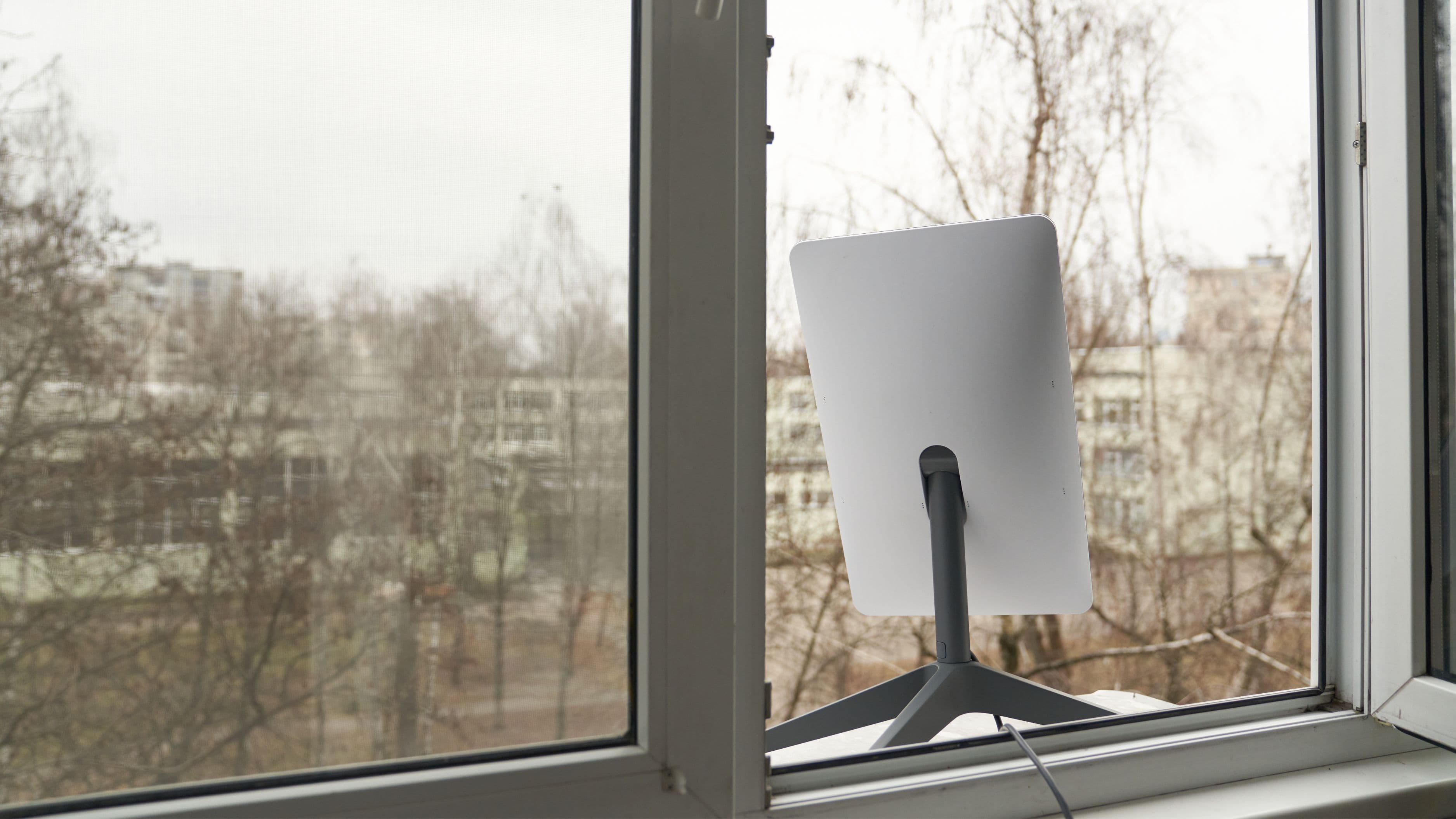
SpaceX normalized the satellite conversation. Whether or not you're a Starlink customer, the company's aggressive LEO deployment shifted public understanding of what satellite connectivity could look like. Starlink's consumer broadband product – hardware that fits on a rooftop and delivers real internet speeds – demonstrated that the "satellite = slow and expensive" assumption was outdated. That mindset shift opened the door for satellite features in consumer devices to be taken seriously.
Outdoor recreation boomed – and outpaced cellular coverage. The pandemic-era surge in hiking, overlanding, van life, and backcountry travel sent millions of people into areas where cell coverage has always been thin or nonexistent. Many of them came back with a clear understanding of what it feels like to be unreachable in a remote location when something goes wrong. The market for satellite communicators followed that experience directly.
The Players Worth Knowing
The satellite connectivity landscape has gotten significantly more crowded, and the different products serve meaningfully different needs.
Apple Emergency SOS via satellite is the one most people have already encountered without necessarily thinking about it. Built into iPhone 14 and later, it's free for two years after purchase and designed specifically for emergency situations – you can contact emergency services or share your location even with no cellular or Wi-Fi signal. It's not a general communication tool; you can't send a text to a friend or browse anything. But as a safety net that's always in your pocket, it's a significant shift in what a smartphone can do.
Garmin inReach devices are the benchmark for dedicated satellite communicators in the outdoor and adventure space. The inReach Mini 2 and inReach Messenger connect to the Iridium satellite network and support two-way messaging (to any phone number or email address, not just other inReach users), SOS signaling with 24/7 monitoring, and location tracking. Plans start around $15/month for basic messaging. Garmin also has an Explorer+ model that doubles as a GPS navigator. These are the devices serious hikers, mountaineers, and backcountry travelers tend to reach for.
Zoleo takes a slightly different approach – it pairs with your smartphone via Bluetooth and uses the Iridium network to extend your phone's messaging capability into off-grid areas. When you have cellular signal, messages go through normally. When you don't, Zoleo routes them via satellite. The integration with a familiar messaging interface makes it feel less like a dedicated piece of gear and more like a seamless extension of your existing phone.
SPOT (now owned by Globalstar) has been in the consumer satellite communicator market longer than most. Its devices focus primarily on one-way location sharing and SOS signaling, which makes them simpler and cheaper than inReach but more limited. SPOT X adds two-way messaging if you need it.
Starlink Direct to Cell is the most interesting long-term play. SpaceX has been building out a satellite constellation specifically designed to communicate directly with standard LTE smartphones – no special hardware, no specialized device. T-Mobile is the launch partner in the United States. Initially rolling out as text messaging, with voice and data to follow, this approach effectively turns every T-Mobile customer's existing smartphone into a satellite-capable device in dead zones. The implications for the rest of the industry are significant.
Traditional satellite phones – Iridium Extreme, Inmarsat IsatPhone – still exist for users who need reliable voice calls from truly anywhere on Earth. They're expensive (devices run $700–$1,500+, with per-minute call rates) and bulky by modern standards, but they remain the most reliable option for voice in the most extreme environments. Their user base is largely professional: maritime, aviation, military, remote industrial operations.
The Real-World Impact
The practical effect of all this isn't that satellite phones become everyday devices. It's that the gap between connected and completely unreachable gets meaningfully smaller for a much larger portion of the population.
Hikers and trail runners who previously had to leave a float plan with someone at the trailhead and hope nothing went wrong now have options that cost less than $300 and fit in a vest pocket. Families with members who travel to remote areas – whether for work or recreation – have ways to stay in limited but real contact. People in disaster-prone regions have a communication backup that doesn't depend on the same infrastructure the disaster is likely to take out.
The SOS capability is where the stakes are highest. Garmin's GEOS response center, which handles inReach SOS alerts, has coordinated rescues in conditions that would have been fatal without satellite communication a generation ago. The iPhone's Emergency SOS via satellite has already been credited with facilitating rescues in areas where no other communication was available. These aren't hypothetical benefits.
What's Still True About the Limitations
Satellite connectivity is better than it's ever been, but it's worth being clear about what it still isn't. Two-way satellite messaging typically has latency measured in seconds to minutes, not milliseconds – you're not going to have a fluid conversation. Data rates are low, which means satellite connectivity is for communication in emergencies and check-ins, not streaming or general internet use (with the exception of Starlink broadband, which is a different product entirely). Coverage, while dramatically improved with LEO constellations, still has gaps and performance variability depending on satellite positioning at any given moment.
Traditional satellite phones also remain niche in a practical sense: the cost of hardware and service plans, the size and weight of the devices, and the limited use cases mean they're not going to replace a smartphone for the average person. What's changing is that satellite connectivity as a feature – embedded in devices people already carry – is becoming normalized rather than specialized.
The Outlook
The trajectory here is fairly clear. Satellite connectivity will continue to become a standard feature in consumer devices rather than a specialized accessory. As Starlink's Direct to Cell rolls out more broadly and other carriers follow with similar arrangements, the distinction between "I have signal" and "I don't have signal" will start to blur for everyday users. The survival-focused use case – emergency SOS, disaster resilience – will be joined by more routine applications: remote work from truly off-grid locations, reliable communication for people in rural areas with chronically poor cellular coverage, and connectivity aboard boats, planes, and vehicles.
For now, if you spend meaningful time in areas where your phone goes dark, the case for adding some form of satellite connectivity to your kit is stronger than it's ever been. And if you don't, you might find the decision gets made for you the next time you buy a smartphone.
FAQ
Do I need a special plan to use satellite features on my iPhone? Apple's Emergency SOS via satellite is included free for two years with iPhone 14 or later. After that, Apple has indicated it will be a paid subscription, though pricing hasn't been finalized at the time of writing. The satellite messaging features use the same interface as iMessage and SMS but route through satellite when no cellular or Wi-Fi signal is available.
How does Starlink Direct to Cell differ from buying a satellite phone? Direct to Cell uses SpaceX's LEO satellites to communicate with your existing LTE smartphone – no new hardware required. A traditional satellite phone is a dedicated device with its own antenna and satellite connection. Direct to Cell is designed to work as a seamless fallback when your phone loses cellular signal; a satellite phone is always connecting via satellite regardless.
Are satellite communicators worth it if I'm just an occasional hiker? It depends on where you hike. If your trails are well-traveled and within cellular range most of the time, probably not. If you regularly go into remote backcountry areas where you're genuinely out of range for extended periods, a device like a Garmin inReach Mini 2 (around $350 with a basic plan) is a meaningful safety upgrade.
What's the difference between one-way and two-way satellite communicators? A one-way device (like basic SPOT models) can send your location and a pre-set SOS or "I'm OK" message, but can't receive replies. A two-way device (like inReach or Zoleo) supports actual back-and-forth messaging with anyone who has a phone or email address. Two-way is generally worth the higher cost if you need real communication rather than just tracking.
How reliable is satellite SOS signaling? The major networks – Iridium (used by Garmin inReach) and GEOS monitoring – have strong track records for SOS reliability. The global Iridium constellation has near-complete Earth coverage including the poles, and GEOS operates 24/7 search-and-rescue coordination. Weather can affect signal in extreme conditions, but satellite SOS is generally considered highly reliable for its intended purpose.
📚 Sources
Apple – Emergency SOS via Satellite Overview – support.apple.com/en-us/111790
Garmin – inReach Satellite Communicator Overview – garmin.com/en-US/c/outdoor-recreation/satellite-communicators
T-Mobile & SpaceX – Starlink Direct to Cell – t-mobile.com/home/starlink
FCC – Hurricane Maria Puerto Rico Communications Impact Report – fcc.gov/document/fcc-releases-puerto-rico-and-us-virgin-islands-communications-status-report
IEEE Spectrum – How Low Earth Orbit Satellites Are Changing Connectivity – spectrum.ieee.org/low-earth-orbit-satellites
Wired – The Satellite Phone Is Back, and It's for Everyone – wired.com/story/satellite-phones-consumer-comeback