That distinction matters. Because the real story isn't whether PCs are dying – they're not – it's about what a "PC" even means anymore, who's still buying them, and what role they play in a world where computing has spread across phones, tablets, wearables, and the cloud simultaneously.
Where the "PC Is Dead" Narrative Came From
The panic started with smartphones. Between 2010 and 2015, global smartphone adoption grew at a pace that genuinely rattled the PC industry. For the first time, people who had never owned a computer could access the internet, communicate, shop, and consume media from a device that fit in their pocket. PC shipments began declining. Industry analysts started asking whether the personal computer was entering its final chapter.
Then tablets arrived, and the narrative intensified. When Steve Jobs introduced the iPad in 2010, he explicitly positioned it as a device that sat between the smartphone and the laptop – better than either for certain tasks, potentially replacing both for many users. For a while, tablet sales surged while PC sales softened further. The PC obituary started getting written in earnest.
What those forecasts missed was the difference between replacing PCs for some tasks and replacing PCs entirely. Smartphones and tablets turned out to be extraordinarily good at consumption – browsing, streaming, social media, messaging, casual gaming. They turned out to be significantly worse at creation – writing long documents, editing video, coding, designing, running complex software, managing multiple windows of information simultaneously. The tasks that actually required a PC didn't go away. They multiplied.
What the Numbers Actually Show
PC shipment data tells a more nuanced story than the headlines usually suggest. Yes, the market peaked around 2011–2012 and has not returned to those highs. But "below the peak" is not the same as "collapsing." IDC and Gartner data consistently show global PC shipments in the range of 250–300 million units annually – a market that, by any reasonable measure, is still enormous.
The COVID-19 pandemic created a dramatic spike in PC demand as remote work and remote learning drove a wave of purchases in 2020 and 2021. That spike was followed by a predictable correction in 2022 and 2023, as demand pulled forward during the pandemic had to normalize. The post-correction numbers look like a decline only if you're using pandemic-era peaks as your baseline – which is a misleading comparison.
More revealing than total shipment volume is where demand is concentrating. Gaming PCs, creative workstations, and high-performance laptops are growing categories. Budget commodity PCs – the kind that dominated the market during the 2000s era of office computing – are the shrinking segment. The PC market isn't dying; it's bifurcating into high-value machines for people who need serious computing power and commoditized devices for everyone else.
The Reinvention Nobody Talks About Enough
While analysts were writing PC obituaries, manufacturers quietly made the PC dramatically better. The laptop of 2025 is almost unrecognizable compared to its 2010 counterpart – thinner, lighter, faster, with battery life that actually lasts a full day, and screens that match or exceed standalone monitors from a decade ago.
Apple's shift to its own silicon in 2020 was arguably the most significant hardware story in consumer computing in a generation. The M-series chips deliver performance that embarrasses comparably priced Intel and AMD machines while running cool enough that fans are rarely needed. The MacBook Air – for decades associated with compromise and trade-offs – became one of the most capable general-purpose computers you could buy, at any price point. That's not a dying category. That's a category having a renaissance.
On the Windows side, Qualcomm's Snapdragon X Elite and the broader push toward ARM-based Windows machines is attempting something similar – bringing mobile chip efficiency to traditional laptop form factors. The results have been more mixed than Apple's transition, but the direction is clear: the PC industry is fundamentally rethinking its hardware foundation, not coasting on the same architecture it's used for thirty years.
Gaming Changed Everything for the High End
One major reason the PC is far from dead is gaming – and specifically the rise of PC gaming as a premium, enthusiast-driven market that resists commoditization. PC gaming revenue has grown consistently for over a decade, driven by a combination of platform openness, hardware customization, and the economics of digital distribution.
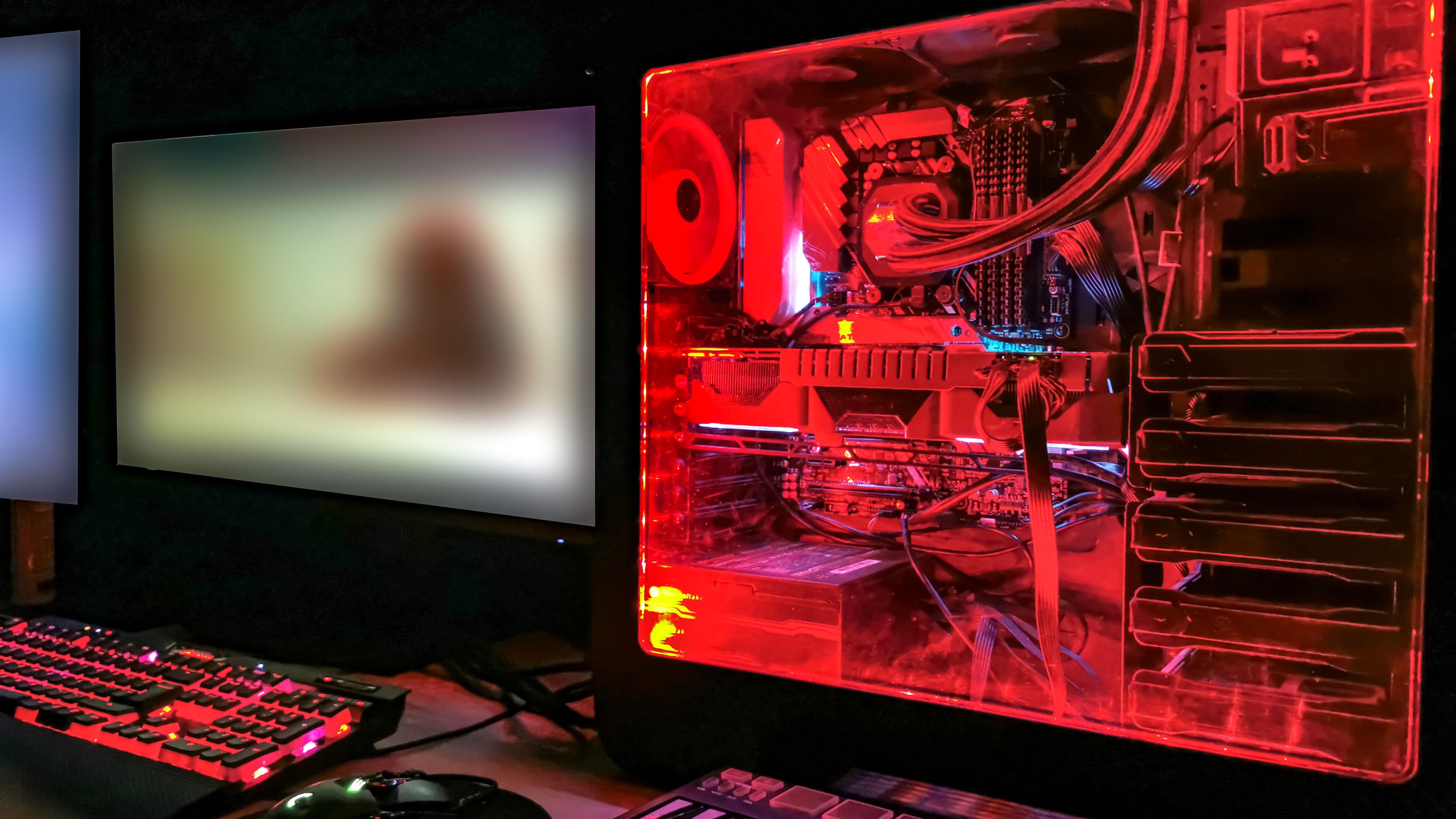
The gaming PC sits at an interesting cultural intersection. It's both a serious productivity tool and a status object. Enthusiast builds with custom water cooling, RGB lighting, and carefully matched components have developed their own aesthetic and community. Streaming platforms and content creation around gaming have turned high-end PC setups into content themselves. Building or upgrading a PC has become a hobby in a way it wasn't during the utilitarian office-computing era.
This enthusiasm has pulled the PC market upmarket in ways that protect it from the commoditization pressure that's squeezed the low end. Someone who builds a $2,000 gaming rig isn't being replaced by a tablet. They're a customer who will continue spending on hardware, peripherals, and software for years.
The Emergence of the "PC-Adjacent" Device
The boundaries of what counts as a PC have genuinely blurred, and that's worth acknowledging honestly. The iPad Pro with a keyboard case and a trackpad runs software – including professional applications like Final Cut Pro – that would have required a laptop five years ago. The line between "tablet" and "laptop" has become largely a question of form factor rather than capability.
Microsoft's Surface lineup deliberately occupies this hybrid space. The Steam Deck is a handheld gaming PC that behaves more like a console in form but runs a full PC operating system. Chromebooks, once dismissed as limited web terminals, now run Android apps and Linux software. The devices that surround the traditional PC have absorbed so much of its functionality that "PC" increasingly refers to a use case and an ecosystem rather than a specific physical form.
This expansion, notably, is not the death of PC computing. It's the spread of it. When an iPad runs Photoshop and a Steam Deck plays PC games in bed, those are extensions of PC computing into new form factors – not replacements for it.
Where PCs Are Genuinely Losing Ground
Being clear-eyed about this means acknowledging where PCs actually have lost. The casual computing market – email, web browsing, social media, video streaming, light document editing – has genuinely shifted to smartphones and tablets for enormous numbers of people. The family that used to have a shared desktop in the living room for general internet use doesn't need that machine anymore. A phone does everything they needed it for, better and more conveniently.
This shift has been real and structural, not temporary. It's the reason the commodity end of the PC market has contracted. The person who would have bought a $400 Windows laptop in 2010 to browse Facebook and do some word processing is now doing all of that on their phone, and may never own a dedicated computer at all. For that user, the PC era genuinely is over – not because the PC got worse, but because something more convenient solved their actual problem.
The question is whether that represents the death of the PC or simply a clarification of what PCs are for. And the answer increasingly looks like the latter.
What's Next: The PC in an Era of Ambient Computing
The most interesting pressure on the traditional PC isn't from tablets or smartphones – it's from the broader shift toward ambient computing, where processing power is distributed across cloud servers, edge devices, wearables, and connected home systems rather than concentrated in a single machine on a desk.
As more software runs in the cloud and more interfaces become voice or gesture-based, the physical form of the device that accesses computing resources matters less than it used to. In that world, a thin client – or even a phone, or a headset – can deliver experiences that previously required a powerful local machine. Microsoft's bet on cloud streaming through Xbox Cloud Gaming is a version of this argument applied to gaming. Apple's Vision Pro is a version of it applied to spatial computing.
But this shift has practical limits that tend to get glossed over in futurist narratives. Latency, bandwidth, privacy concerns, and the irreplaceable advantage of local processing for certain workloads mean that a device with serious local compute will remain valuable for the foreseeable future. The PC isn't going to be replaced by the cloud – it's going to coexist with it, handling the workloads where local performance still matters.
The Honest Answer
The PC era as it existed from roughly 1985 to 2010 – when a desktop or laptop was the primary computing device for most people and the entry point for digital life – that era is genuinely over. Smartphones democratized computing in a way that made the PC optional for a huge percentage of the population.
But the PC as a category of powerful, versatile, general-purpose computing device? That's not dying. It's concentrating in the hands of people who actually need what it offers – creators, developers, gamers, researchers, professionals – and it's getting significantly better for them. The machines are faster and more efficient than they've ever been. The software ecosystem is richer. The form factors are more varied and thoughtful.
What's happening to the PC is what happens to most mature technologies: it's moving up the value chain, becoming more specialized and more capable at its core purpose, while simpler use cases migrate to more convenient alternatives. That's not death. That's maturity.
FAQ
Are PC sales actually declining? They declined from post-pandemic peaks but have stabilized. Global PC shipments remain in the 250–300 million unit range annually, which is a large and economically significant market. The composition of that market has shifted toward higher-end devices as the commodity segment has contracted.
Is gaming driving PC sales? Significantly yes. Gaming PCs and high-performance laptops are growing segments of the market. The enthusiast gaming market in particular has proven resilient to the pressure that's squeezed the commodity PC segment.
Will tablets ever fully replace laptops? For some users, they already have – the iPad Pro running professional software on a fast chip genuinely replaces a laptop for certain workflows. For power users, developers, and anyone who needs to run complex local software or manage many applications simultaneously, tablets still fall short. The gap is narrowing but hasn't closed.
What about Chromebooks – are they real PCs? Chromebooks run a full operating system (ChromeOS, Linux-based), support Android apps, and can run Linux applications. Whether they count as "real PCs" depends on your definition, but they're capable machines for a wide range of tasks and have found a strong foothold in education markets particularly.
Is the Mac making a comeback? Mac market share has grown meaningfully since the transition to Apple Silicon. Apple's M-series chips offered a performance and efficiency combination that attracted users who had previously defaulted to Windows, including many developers and creative professionals. Whether that represents a durable shift or a temporary spike around compelling new hardware is still unfolding.
📚 Sources
IDC – PC Market Shipment Data and Analysis: https://www.idc.com/getdoc.jsp?containerId=prUS52077224
Gartner – PC Shipments Quarterly Data: https://www.gartner.com/en/newsroom/press-releases/2024-01-11-gartner-says-worldwide-pc-shipments-declined-16-percent-in-fourth-quarter-of-2023
Apple – Mac Apple Silicon Transition Overview: https://www.apple.com/newsroom/2020/11/apple-unleashes-m1/
Steam Hardware and Software Survey: https://store.steampowered.com/hwsurvey/
Qualcomm – Snapdragon X Elite for PC: https://www.qualcomm.com/products/mobile/snapdragon/pcs-and-tablets/snapdragon-x-elite
Statista – Global PC Unit Shipments 2006–2023: https://www.statista.com/statistics/273495/global-shipments-of-personal-computers-since-2006/
🔍 Explore Related Topics
Are tablets replacing laptops in 2025