And it's not just older users who feel it. Younger people who never experienced the early web are increasingly drawn to its aesthetics, its energy, and its apparent freedom. So what exactly are people grieving – and is the early internet actually as good as people remember?
What People Are Actually Nostalgic For
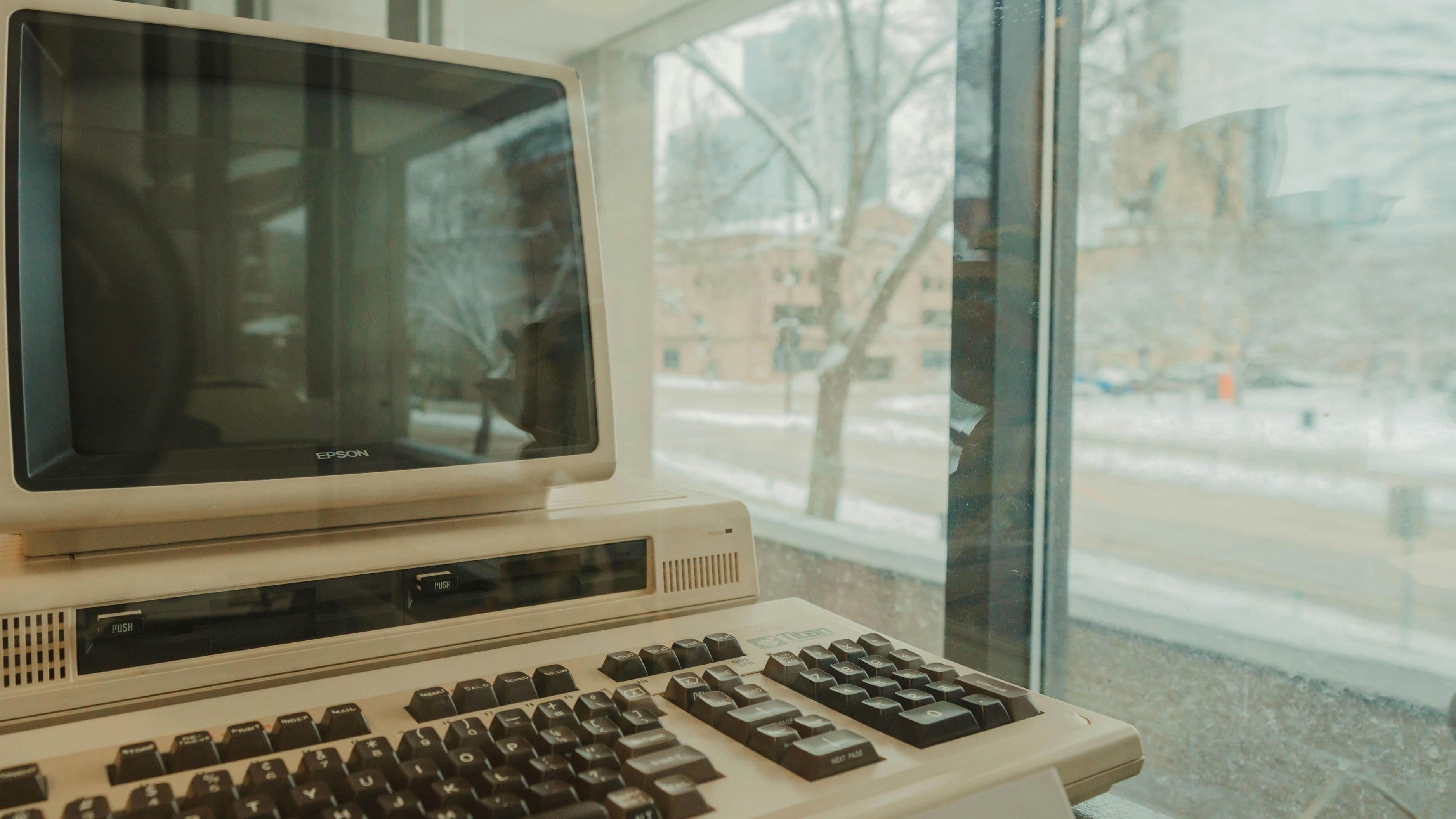
To understand the nostalgia, it helps to understand what the early web was actually like. The internet from roughly 1994 to 2005 was decentralized in a way the current web simply isn't. There was no algorithm deciding what you saw. There were no engagement metrics. There was no one platform where everyone congregated. There were thousands of small, weird, hand-built corners of the internet – personal homepages, fan sites, forums dedicated to niche obsessions, webrings that connected communities of interest in ways that felt genuinely discovered rather than recommended.
The design was objectively chaotic. Tiled backgrounds, animated GIFs, hit counters, pages that took two minutes to load over dial-up and were absolutely worth the wait. But underneath the aesthetic chaos was a different kind of energy: the sense that anyone with enough curiosity and a little technical willingness could build something and put it on the internet, and other people with that same curiosity might find it. It felt handmade. It felt human.
Compare that to the internet of 2025, where the vast majority of online activity is concentrated on a handful of platforms – each with its own algorithmic content curation, its own incentive structure, its own ambient pressure to perform for an audience. The early web wasn't optimized for anything. The current web is optimized for everything, constantly, in ways that are mostly invisible to the user.
The Platform Consolidation Problem
One of the most concrete things the nostalgia is responding to is the dramatic consolidation of where people spend their time online. In the early 2000s, the web was genuinely plural. You had search engines, sure, but the terrain they indexed was vast and varied. Personal websites, independent blogs, GeoCities pages, Angelfire sites, fan forums running on phpBB – the ecosystem was fragmented in ways that created genuine discovery and genuine surprise.
Over the following decade and a half, most of that diversity collapsed into a handful of platforms. Facebook absorbed social networking. YouTube absorbed video. Twitter absorbed real-time public conversation. Google absorbed search to the point where most people treat "the internet" and "Google results" as synonymous. Amazon absorbed e-commerce. And each of those platforms, as they grew, became progressively more algorithmic, more ad-dependent, and more tuned to maximize engagement over quality or authenticity.
The result is an internet that feels, to a lot of users, paradoxically smaller than it did when it had a fraction of the content. You can theoretically find anything on the internet in 2025. In practice, most people see variations of the same few hundred pieces of content per week, pre-sorted by recommendation systems optimized for clicks. The serendipity is largely gone.
The Attention Economy Changed Everything
The early internet had ads, but it wasn't built primarily around ads. The ad-based model that came to dominate – pioneered at scale by Google and then refined into an art form by Facebook – changed the fundamental incentives of every platform that adopted it. When your revenue depends on user attention, you build for user attention. When you build for user attention, you optimize for emotional engagement, which tends to mean outrage, novelty, and the illusion of social validation over depth, accuracy, or genuine connection.
This is well-documented territory at this point, but the psychological impact of spending years inside systems built on those principles is hard to overstate. People who were online before the attention economy fully took hold remember, at some level, what it felt like to use the internet without those incentives baked into every interaction. The nostalgia is partly a comparison between those two experiences – even if the comparison is idealized.
There's also the privacy dimension. The early internet collected very little data about its users, mostly because the infrastructure to do so at scale didn't exist yet. Using the web in 1999 didn't mean generating a detailed behavioral profile that was then sold to advertisers and data brokers. The current surveillance infrastructure of the web – where your searches, clicks, location, and browsing history are tracked, stored, and monetized – would have seemed dystopian to most early internet users if you'd described it to them then.
Why Younger People Feel It Too
Here's something interesting: a significant chunk of the nostalgia for the early internet is coming from people who were never there. Gen Z users who were born after the dial-up era are genuinely drawn to the aesthetics and ethos of the old web. There's a whole visual movement around "Y2K aesthetics" and "indie web" sensibilities – the chunky fonts, the pixel art, the cluttered MySpace-era energy – that has nothing to do with personal memory and everything to do with contrast.
The contrast is this: the visual language of the early web was messy and personal because it was made by individuals who were figuring out HTML for the first time and putting themselves into it. The visual language of the current web is clean and uniform because it's been professionally optimized into a small number of design systems that prioritize conversion. Early web pages had personality because personality was all they had. The current web has polish because polish is what the platforms selected for.
For people who grew up on Instagram and TikTok – platforms built around aesthetically curated content and social comparison – the early web represents something they've never actually had: a digital space that wasn't trying to make you feel bad about yourself or sell you something every three seconds. They're not nostalgic for a past they lived. They're nostalgic for a possibility they've never experienced.
The Indie Web Movement and What It's Trying to Do
The nostalgia isn't just passive. There's an active, growing movement of people trying to rebuild something like the early web's energy and structure within the current internet. It goes by several names – the indie web, the small web, the personal web – but the common thread is a return to individually owned, individually built digital spaces, connected by links and mutual interest rather than algorithms.
People are building personal websites again. Blogging is having a genuine quiet renaissance, particularly through platforms like Substack and Ghost that put ownership back with the writer. RSS readers – a technology that was declared dead a decade ago – are seeing renewed interest from people who want to curate their own information diet rather than having it curated for them. The Fediverse, built around decentralized protocols like ActivityPub, is a whole ecosystem of social platforms (Mastodon being the best-known) built explicitly on the principle that no single company should control the network.
None of this is a mass phenomenon yet. The platforms still dominate. But the indie web movement represents a coherent and growing response to exactly the thing the nostalgia is identifying – the sense that the current internet was built for someone else's benefit, and that a different architecture is possible.
Is the Early Internet Actually As Good As People Remember?
Probably not, in the ways people tend to idealize it. The early internet was also full of spam, scams, genuinely terrible information presented as fact, and an almost total absence of accessibility for anyone who wasn't young, tech-literate, and English-speaking. The communities were often small because they were often exclusionary. The weird handmade energy of GeoCities coexisted with a web that was legitimately hostile to a lot of people who now use the internet daily.
The nostalgia tends to be selective – which is how nostalgia works. People remember the feel of discovery and the sense of possibility. They tend not to remember the hours spent on sketchy download sites, the malware, the forums that were one bad mod away from becoming deeply unpleasant, or the fact that "going online" used to tie up the phone line and cost per minute in some households.
What the nostalgia is really expressing isn't a desire to literally go back. It's a wish that the current internet – with all its scale, infrastructure, and accessibility – had retained some of what made the early web feel worthwhile. The curiosity over engagement. The personal over the polished. The discovered over the recommended.
Whether that's achievable at scale is a genuinely open question. But the fact that so many people are asking it – and building small pieces of an answer in the corners of the current web – suggests the feeling isn't going away.
FAQ
What's the difference between Web 1.0 and Web 2.0? Web 1.0 refers roughly to the early internet – mostly static pages that users read but couldn't easily contribute to. Web 2.0, which took hold in the mid-2000s, introduced user-generated content, social platforms, and dynamic web applications. It gave more people the ability to create and publish online, but it also set the stage for the platform consolidation and attention economy that followed.
What is the indie web movement? The indie web (or IndieWeb) is a community-driven movement built around the idea that individuals should own their online presence – their own domain, their own data – rather than publishing exclusively on platforms that own the infrastructure. It emphasizes personal websites, open standards, and interconnection through links rather than algorithms.
Why do people use RSS in 2025? RSS (Really Simple Syndication) lets you subscribe to websites and receive updates without going through a social platform. It gives you a chronological, algorithm-free feed of content from sources you've chosen. For people tired of having their information diet curated for them, it's a way to take that control back.
Is the early internet being preserved anywhere? Yes – the Internet Archive's Wayback Machine has archived billions of web pages going back to 1996 and is one of the most important digital preservation projects in existence. Archive.org also preserves early software, video games, music, and other digital artifacts from the pre-streaming era.
What are some examples of indie web platforms today? Mastodon (decentralized social networking), Neocities (free personal website hosting explicitly modeled on GeoCities), Bear Blog (minimal blogging), and micro.blog are among the better-known examples. None has the scale of major platforms, which is partly the point.
📚 Sources
The Atlantic – How the internet got so bad (and what might fix it): https://www.theatlantic.com/technology/archive/2022/11/internet-social-media-decline-enshittification/672158/
Internet Archive – Wayback Machine overview: https://archive.org/about/
Pew Research Center – Americans and social media: https://www.pewresearch.org/internet/2021/04/07/social-media-use-in-2021/
Cory Doctorow – Enshittification: how platforms die: https://pluralistic.net/2023/01/21/potemkin-ai/
IndieWeb – About the IndieWeb movement: https://indieweb.org/about