The honest answer is: sooner than most people expect, and slower than the hype suggests. Here's what's actually happening.
What Makes a Robot "Humanoid"?
The term sounds self-explanatory, but it's worth being precise. A humanoid robot is one designed to resemble and replicate the human form – two legs, two arms, an upright torso, a head. The assumption behind this design isn't aesthetic vanity. It's that a human-shaped body can operate in spaces built for humans: climb stairs, open doors, sit in car seats, use tools designed for hands, navigate environments that weren't custom-engineered for machines.
This is the core argument for humanoid form over specialized robots. A purpose-built warehouse robot can move faster and carry more than any humanoid in a flat, structured facility designed specifically for it. But it can't do anything else. A humanoid robot – in theory – could work in that same warehouse, then drive a forklift, then climb a ladder to access a high shelf, then operate a standard drill. Versatility is the whole point.
That versatility is also what makes humanoid robots extraordinarily hard to build well.
Why Building a Practical Humanoid Is So Difficult
Walking looks easy because humans do it unconsciously. In robotics, it's one of the hardest problems ever tackled. The human gait involves constant micro-adjustments – hundreds of tiny corrections per second to maintain balance on uneven terrain, respond to unexpected forces, and adapt to surface changes the foot hasn't touched yet. Replicating that in hardware and software simultaneously, in real time, on unpredictable surfaces, is a genuinely unsolved engineering challenge at scale.
Then there's manipulation – the ability to pick things up, handle them without crushing or dropping them, and perform tasks that require fine motor control. Human hands have 27 bones, dozens of muscles and tendons, and tactile sensors distributed across every fingertip. Building a robotic hand that can reliably pick up a full water bottle, a cracked egg, and a USB cable – without being specifically programmed for each object – remains at the frontier of what's possible.
Add to that the challenge of perception (understanding what's in the environment and what to do about it), decision-making under uncertainty, power consumption (most current humanoids run for an hour or two on a charge), and the sheer cost of manufacturing – and you start to see why this is a hard problem even when the individual components are impressive.
Who Is Actually Building These Things?
The field has become surprisingly crowded in a short period of time, which is itself a signal that something has changed. A few years ago, Boston Dynamics was essentially alone in producing humanoid robots that could do anything visually impressive. Now there's a legitimate race.
Boston Dynamics' Atlas remains one of the most physically capable humanoid robots ever built. The fully electric version unveiled in 2024 replaced the hydraulic system of earlier models, making it quieter, more efficient, and better suited to practical applications. Atlas can perform complex manipulation tasks in lab settings, though it's still far from deployed in real-world work environments at scale.
Tesla's Optimus is arguably the highest-profile entry in the space, largely because of the platform Elon Musk commands and the ambition of the claims made about it. Tesla has demonstrated Optimus performing tasks in its own factory, including sorting battery cells and doing basic assembly work. The company has stated goals of eventually selling Optimus units commercially, though timelines have shifted repeatedly.
Figure AI secured significant funding and a partnership with BMW to deploy humanoid robots in automotive manufacturing. Their Figure 01 and Figure 02 robots are designed specifically for real-world industrial deployment, not just lab demonstration – a distinction that matters enormously. The company has been notably focused on practical capability over impressive demos.
Agility Robotics' Digit is already deployed in Amazon fulfillment centers in a limited capacity, which makes it one of the few humanoid robots with actual commercial deployment rather than just testing. Digit is purpose-designed for logistics environments and has a decidedly non-humanoid upper body, though it walks on two legs. It represents a pragmatic middle ground between fully humanoid and fully specialized.
1X Technologies (backed by OpenAI) and Apptronik (partnered with NASA and Mercedes-Benz) round out a field that also includes significant investment and development from Chinese firms like Unitree Robotics and Fourier Intelligence, which have been producing increasingly capable robots at lower price points than their Western counterparts.
What Has Actually Changed Recently?
The honest version of this story isn't that humanoid robots suddenly became possible – it's that several things converged at the same time to make rapid progress more achievable.
Machine learning and computer vision have improved dramatically. A robot that learns by watching thousands of hours of humans performing tasks, then generalizes that learning to novel situations, is far more capable than one programmed with explicit instructions for every scenario. The same shift that made language models surprisingly capable has made robotic learning systems significantly better at handling real-world variability.
Simulation has become a powerful training tool. Robots can now be trained in virtual environments – running millions of iterations of a task that would take years to perform physically – and then transfer that learned behavior to real hardware. This "sim-to-real" pipeline has compressed development timelines considerably.
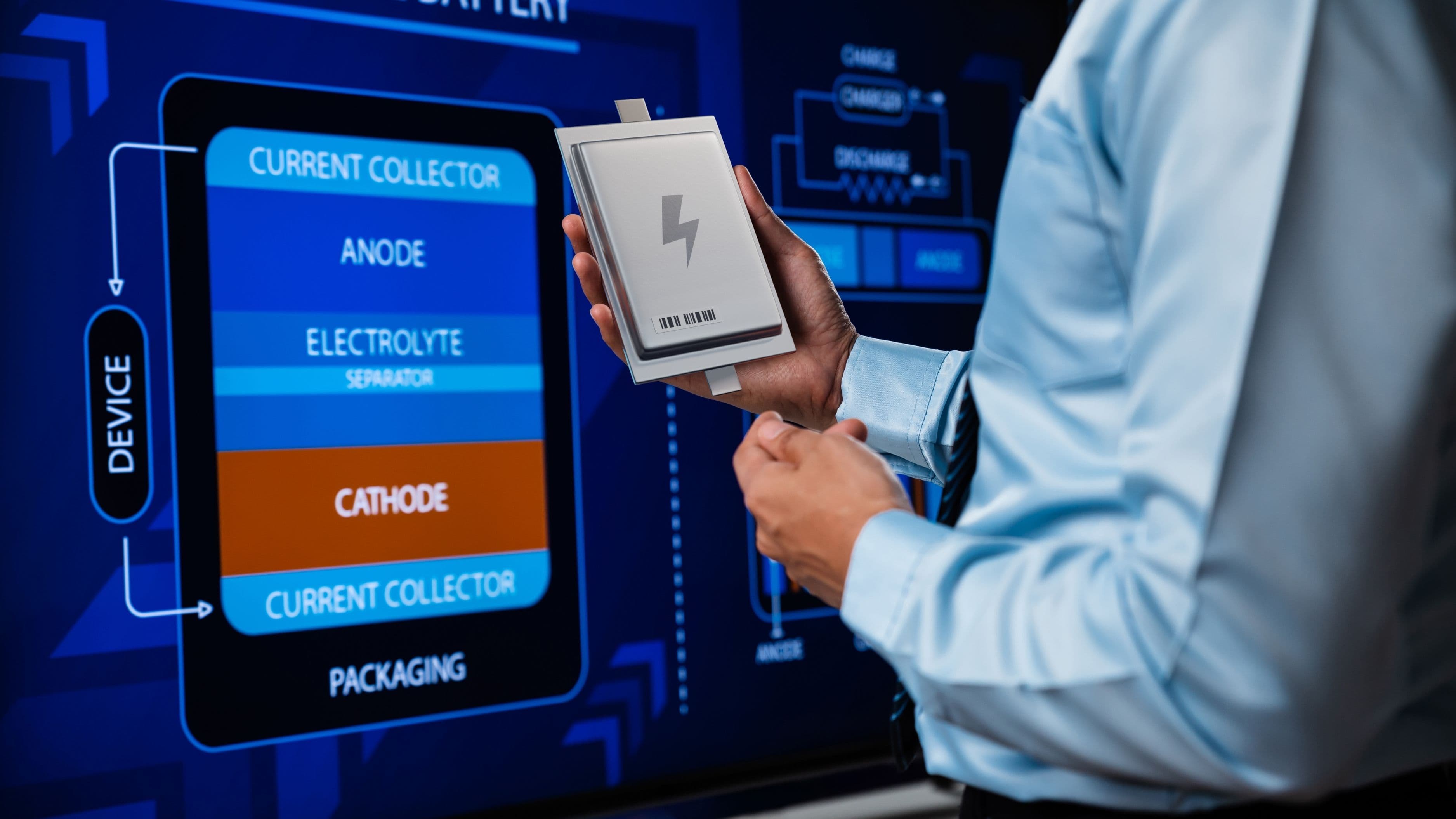
Hardware has also improved. Actuators (the motors that move robot joints) are stronger, lighter, and more efficient than they were five years ago. Battery technology has improved. Sensors are cheaper and more capable. The physical components that were limiting factors are less limiting now, which means software progress translates more directly into real-world capability.
What Can They Actually Do Right Now?
Current humanoid robots can do genuinely impressive things in controlled or semi-controlled environments. Walking on flat and moderately uneven terrain, carrying objects of moderate weight, performing structured assembly tasks, opening doors, climbing stairs – these are real capabilities that exist today, not projections.
What they can't do reliably is handle the full unpredictability of unstructured environments. A robot that performs a task perfectly in a lab may fail when a cardboard box is placed slightly differently than expected, or when lighting changes, or when a new object type appears. The gap between "impressive demo" and "deployed reliably at scale" is still substantial, and most robots being shown off publicly are operating closer to the demo end of that spectrum than the deployed end.
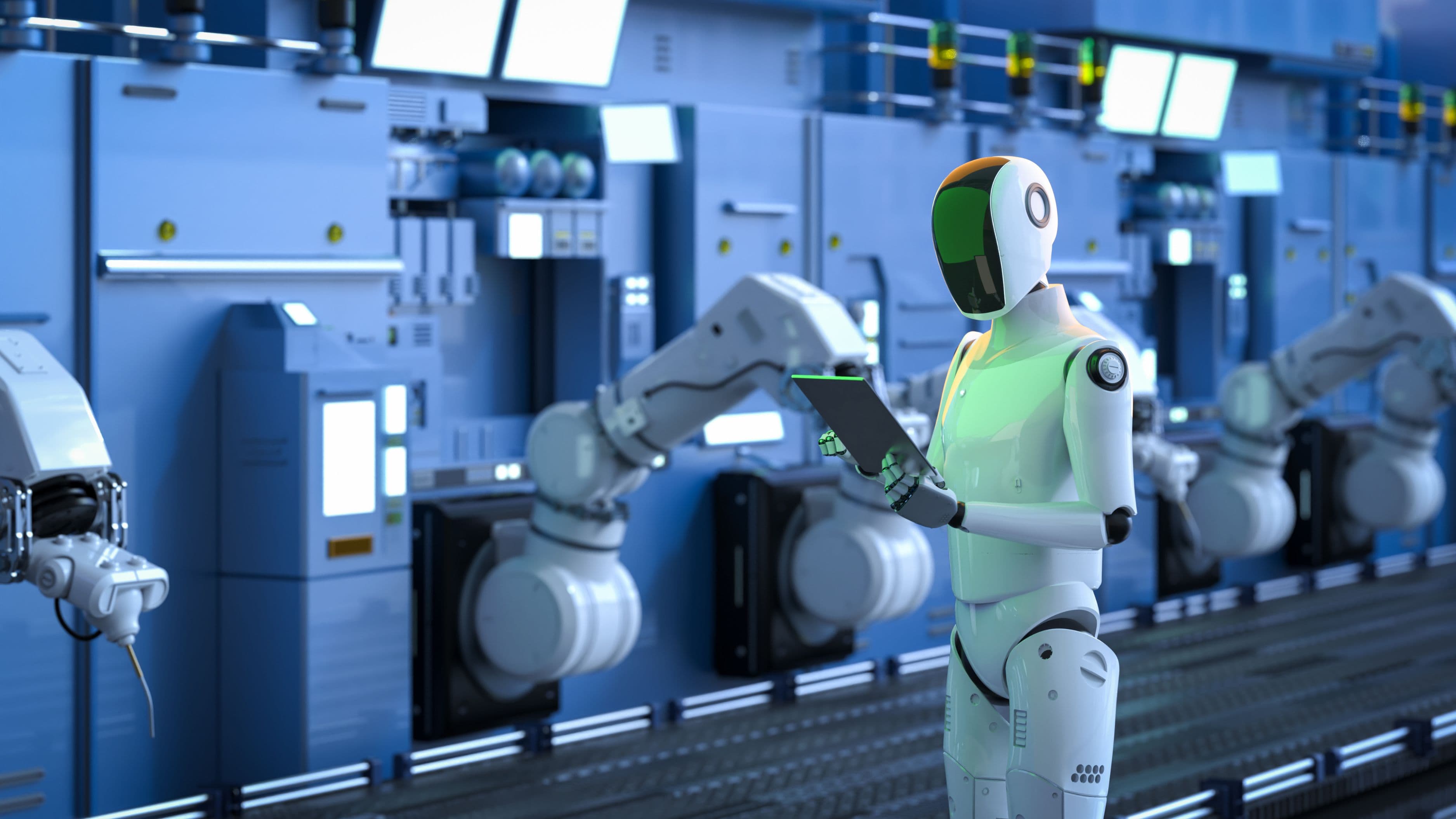
The exception, and it's an important one, is in tightly controlled industrial environments. Automotive manufacturing, fulfillment centers, semiconductor fabrication – these are structured enough that current-generation robots can operate productively with appropriate support and supervision. Agility's deployment at Amazon is real, even if it's limited. Figure's work with BMW is real. These aren't vaporware.
How Close Are We, Really?
Defining "practical" matters here, because the answer changes significantly depending on what you mean.
Practical for structured industrial work? That's happening now, in limited deployment, and will expand meaningfully over the next two to five years. Several major manufacturers have publicly stated targets of deploying humanoid robots in their facilities by 2026–2027, and given the progress of the last two years, those timelines seem at least plausible.
Practical for general-purpose work in unpredictable environments? That's further out. A robot that can reliably perform a wide variety of physical tasks in a home, a hospital, a construction site, or a restaurant – adapting to all the variability those environments involve – requires capabilities that don't yet exist at the reliability and cost level needed for broad deployment. Best estimates from researchers in the field tend to cluster around the 2030s for something approaching that level of general capability, with significant uncertainty in both directions.
Practical for consumers at accessible price points? That's the longest horizon. The humanoids being built today cost hundreds of thousands of dollars to produce. Even with manufacturing scale driving costs down significantly, a consumer-viable price point – and the reliability required to deploy robots in homes around people who aren't engineers – is likely a decade or more away.
Why It Actually Matters
The case for humanoid robots isn't really about novelty. It's about labor economics, demographic shifts, and what humans want to spend their time doing.
Aging populations in Japan, South Korea, Germany, and the United States are creating genuine labor shortages in physical work – elder care, manufacturing, logistics, construction. These are industries where demand is growing and worker supply is shrinking, and where automation has historically struggled because the work is too varied and physically demanding for conventional robots. Humanoid robots are being developed specifically to address this gap, not as a futuristic experiment but as a practical response to a problem that's already here.
There's also a more fundamental question about what becomes possible when physical labor can be automated at a general level the way digital work has been over the past few decades. The economic and social implications of that shift are complex, contested, and genuinely uncertain – but they're worth thinking about now, while the technology is still early enough that its development can be shaped.
FAQ
Are humanoid robots already being used in real workplaces? Yes, in limited deployment. Agility Robotics' Digit is operating in Amazon fulfillment centers, and Figure AI has a deployment partnership with BMW for automotive manufacturing. These are early-stage and supervised deployments, not fully autonomous mass deployment, but they are real commercial applications rather than lab demonstrations.
What's the difference between a humanoid robot and an industrial robot arm? Industrial robot arms are fixed, purpose-built for specific tasks in controlled environments, and extremely reliable within those constraints. Humanoid robots are mobile, versatile, and designed to operate in general-purpose environments – but they're currently less reliable and far more expensive than specialized industrial robots. The trade-off is flexibility versus precision.
How long can current humanoid robots operate before needing to recharge? Most current humanoid robots operate for one to two hours on a full charge under typical working conditions, which is one of the significant practical limitations for real-world deployment. Battery technology improvement is one of the active areas of development in the field.
Will humanoid robots take jobs? This is genuinely contested, and the honest answer is: probably some, while creating others, with the distribution of those effects being uneven. Historical automation has generally created more jobs than it eliminated in aggregate while causing significant disruption for specific workers and industries. Whether that pattern holds for more general-purpose physical automation is a live question that economists disagree on.
What's the most advanced humanoid robot right now? "Most advanced" depends on what you're measuring. Boston Dynamics' Atlas is widely considered the most physically capable for complex movement and manipulation. Figure 02 and Tesla's Optimus are competitive in terms of practical task performance. Chinese companies like Unitree have produced impressive robots at lower cost. The field is moving fast enough that rankings shift frequently.
📚 Sources
Boston Dynamics – Atlas Robot Overview: https://bostondynamics.com/atlas/
Figure AI – Figure 02 Announcement: https://www.figure.ai/news/figure-02
Agility Robotics – Digit at Amazon: https://agilityrobotics.com/news/agility-robotics-and-amazon
IEEE Spectrum – The State of Humanoid Robots 2024: https://spectrum.ieee.org/humanoid-robots-2024
MIT Technology Review – Why Humanoid Robots Are Having a Moment: https://www.technologyreview.com/2024/01/humanoid-robots
Tesla – Optimus Robot Updates: https://www.tesla.com/optimus
McKinsey Global Institute – The Future of Work After COVID-19: https://www.mckinsey.com/featured-insights/future-of-work/the-future-of-work-after-covid-19