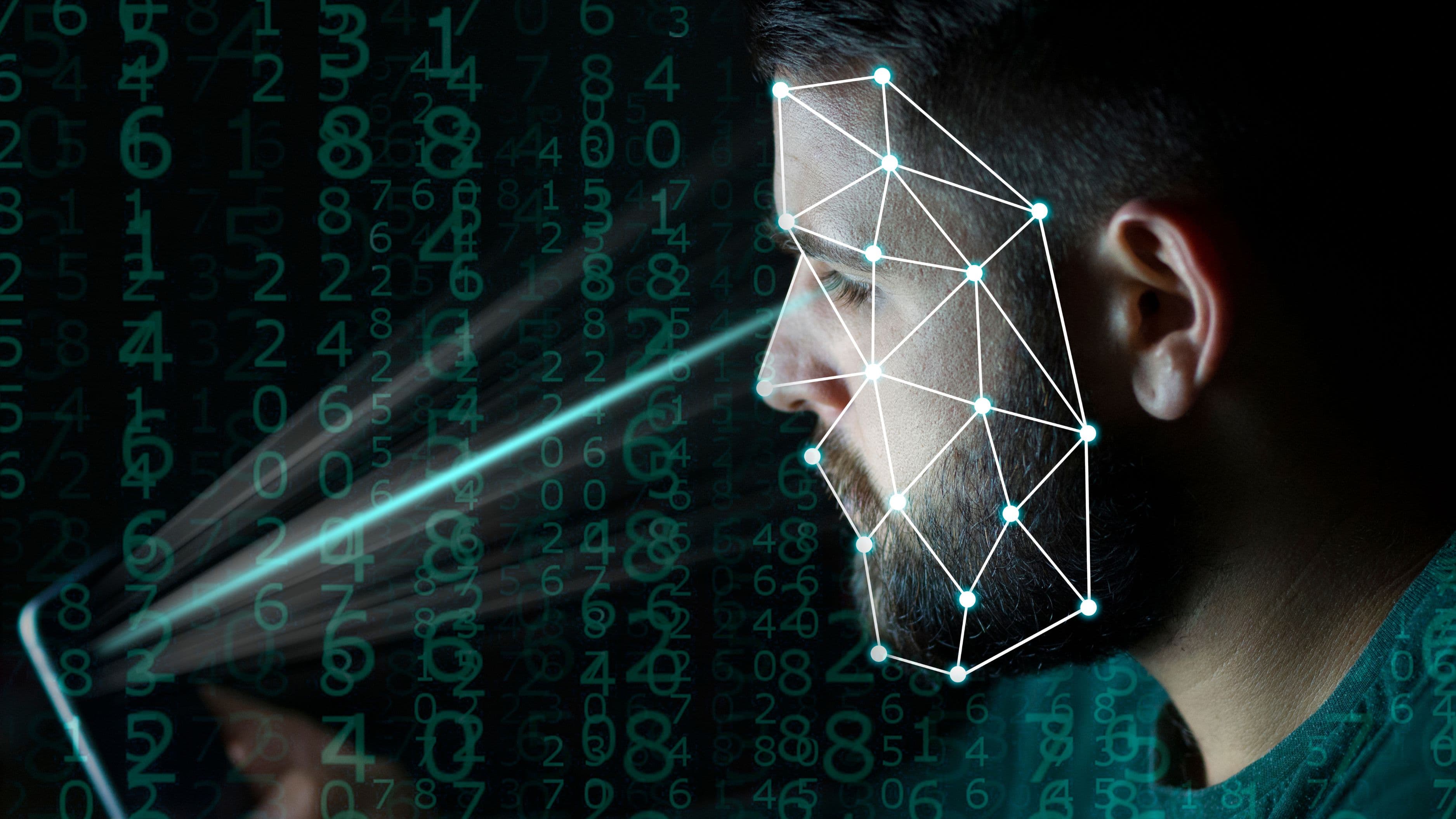
Whether this technology is being used on you — and whether that's legal — depends enormously on where you live. Here's where things actually stand.
What We're Actually Talking About
Facial recognition in public spaces typically refers to live or retrospective matching: cameras capture faces in public, software converts them into biometric data, and that data is compared against a database — which might contain criminals, missing persons, known suspects, or in some cases, every person on a national ID register.
It's worth distinguishing between two main deployment scenarios. The first is law enforcement use — police or government agencies using facial recognition to identify individuals in crowds, at protests, during investigations, or in real time on public streets. The second is commercial use — retailers, transport hubs, stadiums, and private venues using the technology for security, access control, or even targeted advertising. The legal frameworks that apply to each often differ significantly, and neither is uniformly regulated anywhere in the world.
The technology is also far from perfectly accurate. Studies — including research from the US National Institute of Standards and Technology — have documented meaningful error rates, particularly for women, older people, and people with darker skin tones. This isn't a minor footnote: a misidentification in a law enforcement context can have serious consequences for the person incorrectly flagged.
The United States: A Patchwork With No Federal Standard
The US has no federal law governing facial recognition use in public spaces. What exists instead is a patchwork of city and state-level legislation that varies dramatically depending on where you are.
A handful of cities — including San Francisco, Boston, and Portland, Oregon — have banned or severely restricted government use of facial recognition in public. San Francisco was among the first, passing its ban in 2019, citing civil liberties concerns and the documented accuracy problems in identifying people of color. Several other cities followed with similar restrictions.
At the state level, Illinois stands out with the Biometric Information Privacy Act (BIPA), which requires consent before collecting biometric data including facial geometry. Illinois residents have successfully sued companies under BIPA, resulting in significant settlements. A few other states — Texas and Washington among them — have biometric privacy laws, though with weaker enforcement mechanisms.
Outside those regulated zones, however, there is largely no legal barrier to government agencies or private companies deploying facial recognition in public. Federal agencies including the FBI, ICE, and the TSA have used or piloted facial recognition systems with limited oversight. A Government Accountability Office report found that many federal agencies couldn't fully account for which systems they were using or where data was being retained.
The result is a country where the legality of facial recognition on a public street can vary from city to city, and where a resident of one state has meaningful protections while someone in the next state has almost none.
The European Union: Strict Rules — With Significant Carve-Outs
The EU has taken the most comprehensive regulatory stance of any major jurisdiction. The EU AI Act, which came into force in 2024, classifies real-time remote biometric identification systems in public spaces as high-risk and, in most cases, prohibited. This is a significant legal baseline: deploying live facial recognition to identify people in public is, as a default position, illegal across EU member states.
The catch is in the exceptions — and they're not small ones. Member states can authorize real-time facial recognition in public for specific law enforcement purposes: searching for victims of crime (including missing children), preventing specific and imminent terrorist threats, and identifying suspects in serious criminal investigations. These authorizations require prior judicial or independent authorization in most cases, and their use is supposed to be logged and audited.
Retrospective facial recognition — analyzing stored footage rather than live feeds — faces different rules and is generally permitted under broader law enforcement justifications, though still subject to GDPR and national data protection frameworks.
In practice, enforcement is uneven. Several EU member states have trialed or deployed facial recognition in ways that advocacy groups argue pushed or exceeded existing legal limits, and the implementation of the AI Act's provisions across 27 different national legal systems is still in process. But the foundational legal position is clearer and more protective of individuals than in most other regions.
The United Kingdom: Post-Brexit Divergence
The UK left the EU before the AI Act was finalized, and has deliberately chosen a lighter-touch regulatory approach. There is no explicit UK law banning or comprehensively regulating live facial recognition in public spaces.
UK police forces have conducted live facial recognition deployments at public events, shopping areas, and sporting venues — with the Metropolitan Police and South Wales Police among the most active. These have faced legal challenges. In 2020, the Court of Appeal ruled that South Wales Police's use of live facial recognition violated privacy rights under human rights law and data protection regulations, citing insufficient controls over how the technology was used and who was included in the watchlists.
Despite that ruling establishing clearer requirements, police forces have continued deployments, arguing that policy updates now make them compliant. Privacy advocates and some legal experts disagree about whether existing frameworks are sufficient without explicit primary legislation.
The UK government's stated position leans toward enabling innovation rather than restriction, suggesting that comprehensive federal-style regulation is unlikely in the near term. A code of practice published by the Information Commissioner's Office provides guidance, but guidance is not law.
China: The Most Extensive Deployment in the World
China has built the most pervasive facial recognition infrastructure of any country, integrated into transportation systems, residential areas, commercial spaces, public security networks, and social governance programs. The technology is used for law enforcement identification, tracking individuals flagged by authorities, monitoring minority populations, and a range of social management applications.
China has introduced some domestic regulations on facial recognition — including rules requiring consent for commercial uses in certain contexts, and restrictions on using facial recognition in residential buildings without resident consent. These rules, introduced in 2021–2022, represent a real regulatory development, and enforcement actions have been taken against some commercial misuses.
But these commercial regulations exist alongside expansive government and law enforcement use that operates under different rules, with very limited independent oversight. For anyone seeking to understand the practical reality, the scale of deployment has no equivalent elsewhere in the world.
India: Large-Scale Deployment, Minimal Framework
India has deployed facial recognition at scale across airports, railways, public events, and in law enforcement contexts — including for tracking protesters and verifying voter identity. The National Automated Facial Recognition System (AFRS) was developed by the National Crime Records Bureau to link facial recognition to national identity databases.
There is currently no comprehensive data protection law that specifically regulates biometric surveillance in public spaces. India passed a Digital Personal Data Protection Act in 2023, but critics note that it contains broad government exemptions that limit its effectiveness as a check on state-run facial recognition programs. Legal challenges have been filed by civil liberties organizations, but no binding restrictions have been established at the national level as of mid-2025.
Australia: Cautious Deployment and Active Policy Debate
Australia has used facial recognition in specific contexts — airport border processing through the SmartGate system being the most established — and trials have been conducted in other settings. The country does not have a general prohibition on facial recognition in public spaces.
The Privacy Act covers some biometric data collection by private entities, and the Australian Human Rights Commission has called for a moratorium on government use of facial recognition in public spaces pending adequate regulation. State and territory laws add another layer of variation.
Several proposals for stronger national oversight have been debated but not yet legislated, leaving Australia in a position similar to the UK — regulated at the edges but without a comprehensive framework.
Why This Matters Beyond the Legal Question
Even in jurisdictions where facial recognition is legal, the ethical and social questions don't disappear. The documented accuracy disparities mean people from certain demographic groups face a higher risk of misidentification — and the consequences of being misidentified by law enforcement are not abstract. There are documented cases in the US of individuals being wrongly arrested based on facial recognition matches.
There's also a chilling effect argument that's harder to quantify but no less real: when people know they may be identified and logged in public spaces, behavior changes. Attending a protest, visiting a healthcare provider, or simply moving through a city while aware of biometric surveillance creates a different experience of public life than one without it. Several democratic governments have recognized this as a legitimate civic concern, even while keeping enforcement tools in place.
The technology is also improving rapidly. Error rates are decreasing. Systems that struggled with certain demographics five years ago are more accurate today — which doesn't eliminate the civil liberties concerns, but does change the technical argument used to oppose deployment on accuracy grounds alone.
FAQ
Can I opt out of facial recognition in public spaces? In most jurisdictions, there is no formal opt-out mechanism for government use of facial recognition in public spaces. Some commercial uses — a retailer or venue — may be subject to consent requirements depending on local law. In the EU, the general prohibition on live public facial recognition provides the strongest protection; elsewhere, your options are limited.
What's the difference between live and retrospective facial recognition? Live facial recognition identifies people in real time from a camera feed. Retrospective facial recognition analyzes stored footage after the fact. Most legal frameworks, where they exist, treat these differently — retrospective use typically faces fewer restrictions, even in jurisdictions that limit live deployment.
Are private companies more restricted than governments? Often yes, in practice. Government use tends to be authorized under broad law enforcement or national security powers. Private companies in most jurisdictions face consent and data protection requirements that government agencies can bypass under public safety justifications. The EU's AI Act applies to both, but its exceptions largely carve out law enforcement use.
What can I do if I believe I've been wrongly identified? This varies significantly by country. In the EU and UK, individuals have data subject rights under GDPR and the UK GDPR respectively, including the right to request information about how their data has been processed. In the US, rights depend on which state you're in. In countries with minimal regulation, formal recourse is limited.
Is facial recognition the same as CCTV? No. Standard CCTV records footage for manual review — a human has to watch it to identify someone. Facial recognition adds automated biometric identification, converting faces into unique data signatures that can be matched against databases in real time or retrospectively. The distinction matters legally and in terms of scale: automated identification across millions of faces per hour is categorically different from a security guard reviewing a tape.
The Bottom Line
Facial recognition in public spaces occupies a messy legal landscape with no global consensus. The EU has the most protective framework; China has the most extensive deployment with the least independent oversight; the US has strong local protections in some cities and almost none elsewhere; and most of the rest of the world is still working out where the lines should be.
What's consistent across jurisdictions is that the law is trailing the technology — sometimes by years. Regulations being written today are responding to systems that have already been deployed and refined. That gap between capability and oversight is where most of the real risk currently lives, and it's worth paying attention to regardless of where you are.
📚 Sources
European Parliament – EU AI Act key provisions and prohibitions: https://www.europarl.europa.eu/topics/en/article/20230601STO93804/eu-ai-act-first-regulation-on-artificial-intelligence
NIST – Face Recognition Vendor Testing accuracy and demographic findings: https://www.nist.gov/programs-projects/face-recognition-vendor-testing-frvt
Government Accountability Office – Federal use of facial recognition technology: https://www.gao.gov/products/gao-22-105985
UK Judiciary – Bridges v South Wales Police Court of Appeal ruling: https://www.judiciary.uk/judgments/bridges-v-south-wales-police/
Electronic Frontier Foundation – Atlas of Surveillance (US deployments): https://atlasofsurveillance.org
Australian Human Rights Commission – Human Rights and Technology Final Report: https://humanrights.gov.au/our-work/rights-and-freedoms/publications/human-rights-and-technology-final-report-2021
MIT Technology Review – China facial recognition regulations analysis: https://www.technologyreview.com/2021/08/11/1031636/china-facial-recognition-regulation/