What Differential Privacy Actually Means
Differential privacy is a mathematical framework for adding carefully calibrated "noise" – randomized, statistically controlled inaccuracy – to a dataset before it's analyzed, in a way that preserves useful overall patterns while making it mathematically difficult to identify any single person's specific information within that data.
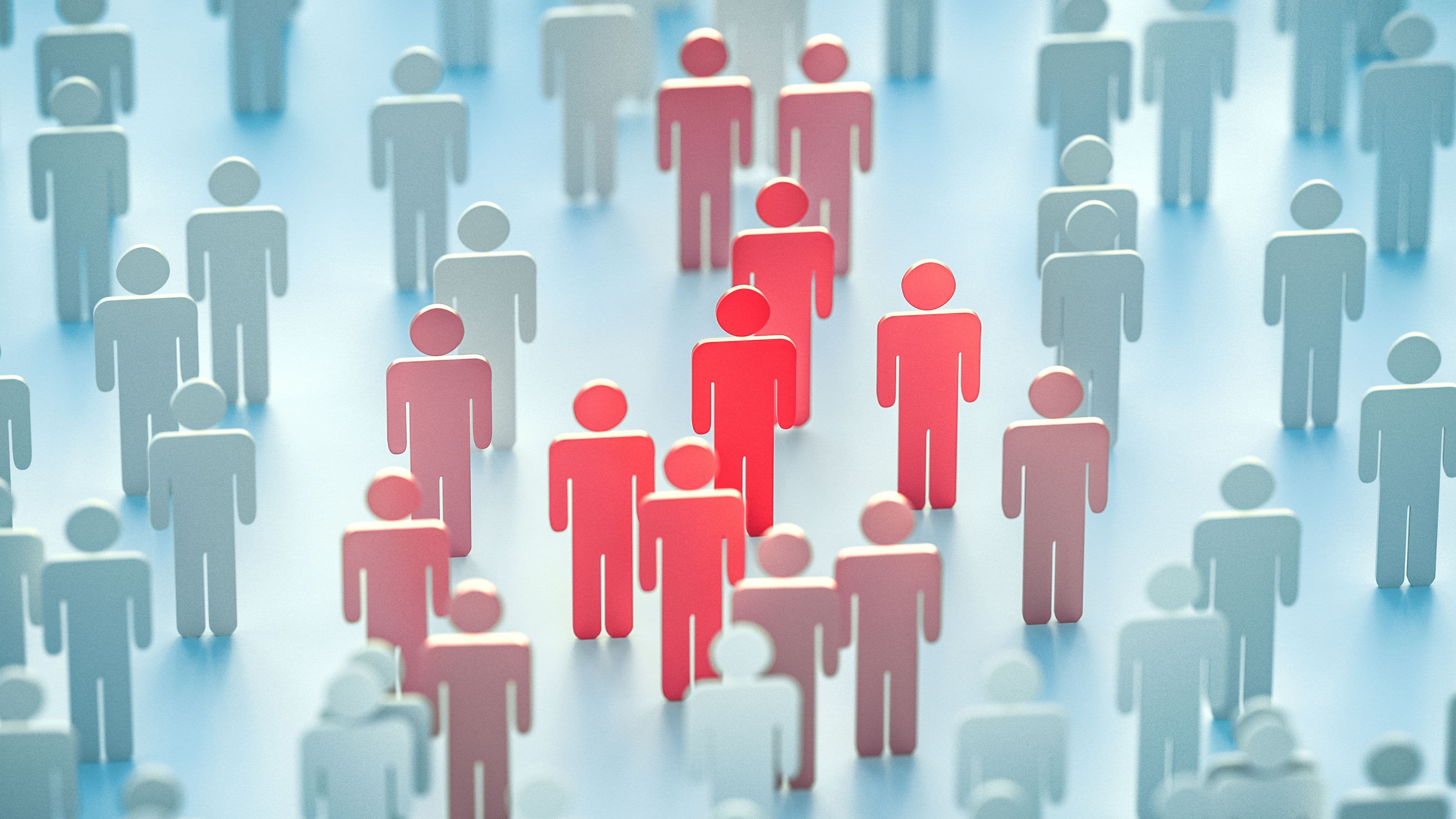
The core idea is simple even though the math behind it isn't: a company should be able to learn things like "60% of users in this age group prefer feature A" without being able to reliably determine whether any one specific person contributed to that statistic. The "differential" part refers to the guarantee that the output of an analysis looks statistically almost identical whether or not any one individual's data was included, which is what makes it mathematically resistant to re-identification.
This is a meaningfully different approach from simply removing names or obvious identifiers from a dataset, a method known as anonymization that has repeatedly been shown to fail – researchers have re-identified supposedly anonymous individuals in datasets by cross-referencing them with other public information. Differential privacy is designed to hold up even against that kind of cross-referencing attack, because the noise is built into the data itself rather than relying on stripping out identifying fields.
Why It Matters
The practical tension it solves is real: companies want aggregate insights – trends, usage patterns, feature performance – without holding onto (or exposing) sensitive individual-level data longer or more precisely than necessary. Differential privacy offers a mathematically provable way to quantify exactly how much privacy protection a given dataset has, using a value called the "privacy budget" or epsilon, rather than relying on vague assurances that data has been "anonymized."
It also matters for how companies respond to data requests, breaches, and regulatory scrutiny. A dataset processed with differential privacy carries a formal, quantifiable guarantee about re-identification risk, which is a much stronger position to be in than an informal claim that identifying details were removed.
How Big Tech Companies Use It
Apple has used differential privacy since 2016 to collect usage data from iOS devices – things like popular emoji, commonly typed words for keyboard suggestions, and app usage patterns – without linking that data back to individual users' identities. The noise is added directly on the device before any data is ever sent to Apple's servers, a method known as local differential privacy.
Google has applied similar techniques through its open-source library, RAPPOR, originally used to gather aggregate statistics on Chrome browser settings and usage patterns without seeing any individual user's specific configuration. Google has since expanded differential privacy techniques into other products, including aggregated location and mobility data.
The U.S. Census Bureau adopted differential privacy for the 2020 Census specifically to prevent the kind of database reconstruction attacks that researchers had demonstrated were possible against earlier census data protection methods, representing one of the largest real-world deployments of the technique to date.
Practical Application and Limitations
Differential privacy isn't free – there's a genuine trade-off between privacy protection and data accuracy. The more noise added to protect individual privacy, the less precise the resulting aggregate statistics become, which means companies and institutions have to make deliberate choices about how much privacy budget to "spend" on any given analysis.
It also isn't a cure-all. Differential privacy protects against re-identification within the specific dataset and analysis it's applied to, but it doesn't prevent every type of privacy risk, particularly around how data is collected and stored in the first place, or how it might be combined with entirely separate data sources over time.
Future Outlook
As regulations like GDPR and various U.S. state privacy laws push companies toward stronger, more provable privacy protections, differential privacy is likely to keep expanding beyond its current use cases into more everyday data products, from health research datasets to advertising measurement tools. The tooling is also getting more accessible – open-source libraries have lowered the barrier for smaller companies and researchers to apply the same techniques that were once mostly limited to large tech companies with dedicated privacy engineering teams.
FAQ
Does differential privacy mean my data is completely anonymous? It means re-identifying you within that specific dataset becomes mathematically much harder, with a quantifiable guarantee, but it's not an absolute guarantee against all forms of privacy risk, especially across combined datasets.
Is differential privacy the same as encryption? No. Encryption protects data from being read by unauthorized parties, while differential privacy protects against identifying individuals within data that is being legitimately analyzed.
Can differential privacy make data completely useless? If too much noise is added, yes, accuracy suffers significantly. Companies calibrate the privacy budget carefully to balance meaningful protection with data that's still useful for analysis.
📚 Sources
Apple – Differential Privacy overview – https://www.apple.com/privacy/docs/Differential_Privacy_Overview.pdf
U.S. Census Bureau – Disclosure Avoidance and differential privacy in the 2020 Census – https://www.census.gov/about/policies/privacy/statistical_safeguards/disclosure-avoidance-2020-census.html
Google Research – RAPPOR: Randomized Aggregatable Privacy-Preserving Ordinal Response – https://research.google/pubs/pub42852/