There's a name for this phenomenon, borrowed from science fiction: the Dark Forest Theory of the Internet. It's one of the more genuinely interesting frameworks to emerge from internet culture discourse in recent years, and once you understand it, you start seeing it everywhere.
Where the Idea Comes From
The original Dark Forest theory is a concept from astrophysics and science fiction, most famously explored in Liu Cixin's The Three-Body Problem trilogy. In that framework, the universe is a dark forest full of armed hunters. Any civilization that broadcasts its presence risks being detected and eliminated by another civilization that can't afford to assume good intent. The rational survival strategy is therefore silence – stay hidden, reveal nothing, and if you do detect another presence, act first.
Writer Yancey Strickling adapted this metaphor to the internet in a 2019 essay, and it spread quickly because it mapped cleanly onto something many people were already experiencing without quite having language for it. The open, indexed, searchable public internet – social media, comment sections, public forums – is the noisy center of the forest where predators roam. The rational response, increasingly, is to get off the main paths and move deeper into the dark.
What "Predators" Means Online
In Liu Cixin's universe, the predators are alien civilizations with weapons. On the internet, the threats are different in kind but similar in effect – they're forces that punish visibility.
The most obvious is the attention economy itself. When you post publicly, you're not just communicating with the people you intend to reach. You're posting into a system optimized for engagement, which means your content is most likely to surface when it triggers strong reactions – outrage, controversy, virality. The algorithm doesn't distinguish between wanted and unwanted attention. It just amplifies. A thoughtful post can reach an entirely different audience than the one it was written for, and that audience may not be charitable.
Then there are the more direct threats: harassment campaigns, bad-faith screenshotting and decontextualization, dogpiling, public shaming for things said years ago, and the ever-present risk that something you say in what feels like a small context will get amplified into a much larger and angrier one. For people who have experienced any of this – and increasingly, for people who have watched it happen to others – the risk calculation of public posting changes. The potential downside of visibility starts to outweigh the potential upside.
What the Dark Forest Actually Looks Like
The dark forest internet isn't one place. It's a collection of low-visibility spaces that exist alongside the public web but operate on different terms.
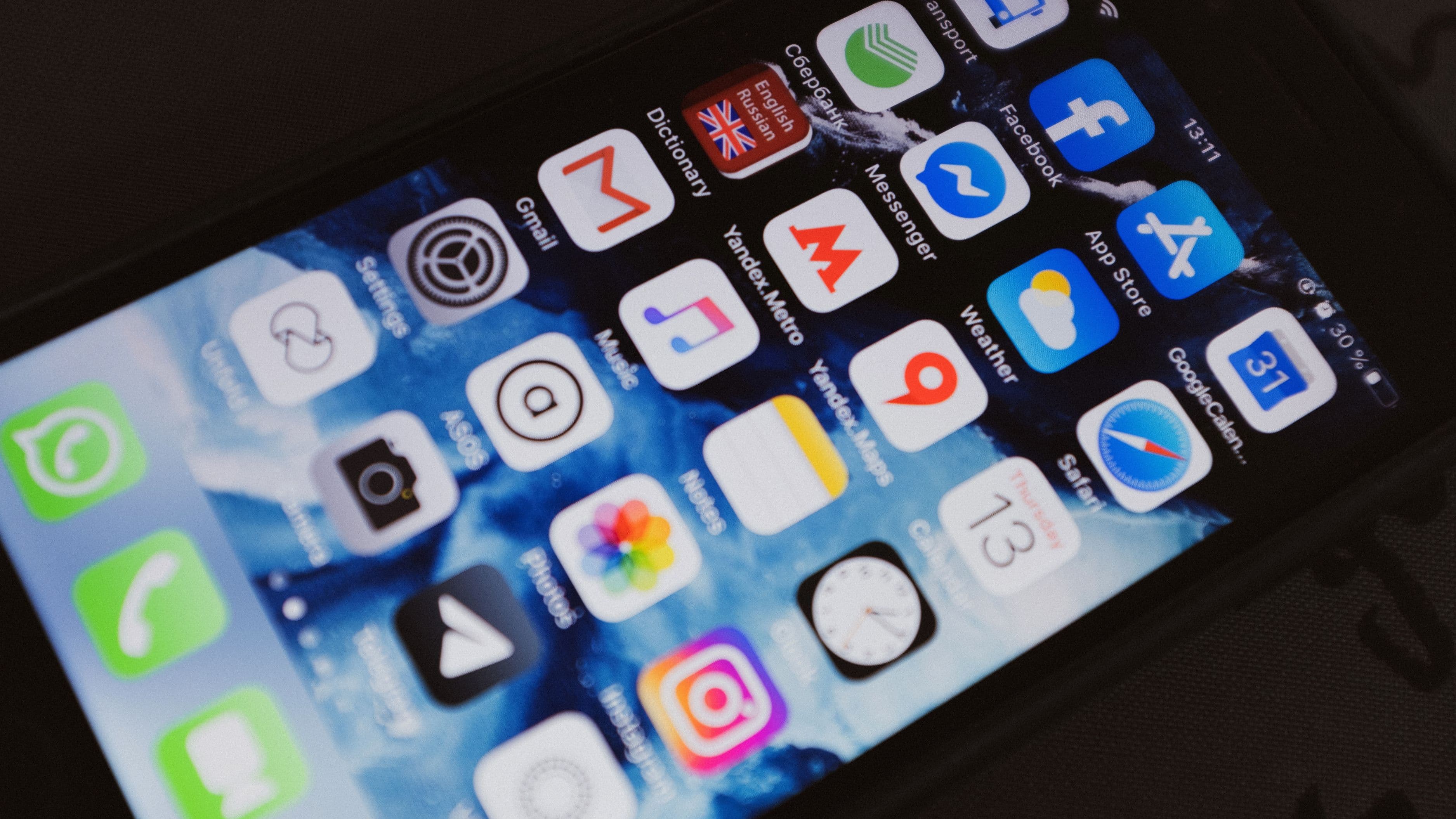
Private group chats – on iMessage, WhatsApp, Signal, and Telegram – are the most common form. These are spaces where people share what they'd never put on a public timeline, where conversation is more honest, more experimental, and less performative because there's no audience to perform for. Discord servers sit a step above that – they're technically accessible to more people, but they're not indexed by search engines and require an invitation or a specific link to find. Substack newsletters and paid communities occupy a similar position; they're public in theory but invisible in practice to anyone not already subscribed.
Even within ostensibly public platforms, people have developed dark forest behaviors. Posting in ways deliberately designed to be unsearchable – misspelling keywords, using specific emojis as stand-ins for words, speaking in in-group references that outsiders can't decode. It's a kind of camouflage built into the content itself, designed to be legible to the intended audience and opaque to anyone else.
Why This Theory Resonates So Strongly Right Now
The Dark Forest framing landed at a specific moment for a reason. The early-internet promise – that open, connected, public digital spaces would produce better discourse, more democracy, and deeper human connection – had, by the late 2010s, curdled pretty visibly. Twitter had become exhausting. Facebook had become a disinformation engine. Reddit could be a wonderful resource or a nightmare depending entirely on which corner you wandered into and when.
What the Dark Forest theory does is give a coherent explanation for a behavior pattern that looks, on the surface, like retreat or withdrawal, but is actually a rational adaptation. People aren't abandoning online discourse because they have nothing to say. They're moving their real conversations somewhere that doesn't punish sincerity, curiosity, or nuance. The public internet is increasingly a place for performance; the dark forest is where the actual talking happens.
There's also something worth noting about the network effects in reverse. The more people withdraw to private spaces, the more the public internet's signal-to-noise ratio degrades, which makes it less valuable, which drives more people to private spaces. It's a self-reinforcing loop, and you can watch it playing out in real time across platforms.
The Trade-Offs Nobody Talks About
The dark forest isn't an unambiguously good thing, even if the instinct behind it is understandable. There are real costs to the fragmentation of public discourse.
Knowledge that used to be openly shared and discoverable now lives in private channels where it's inaccessible to anyone outside the group. Communities that used to be findable – crucial for someone who feels isolated and needs to find their people – become harder to locate. The serendipity of stumbling across an interesting conversation between strangers, which was one of the genuinely good things about the early open web, disappears when everything moves to invite-only spaces.
There's also the filter bubble problem, but sharper. In a closed community you chose, the people you're talking to are more likely to agree with you, reinforce your existing views, and reflect your existing assumptions back at you. The friction of encountering genuinely different perspectives – which public spaces, for all their dysfunction, do provide – gets eliminated. That's comfortable, but it's not always clarifying.
And private spaces aren't immune to their own forms of dysfunction. Harassment and bad-faith behavior can follow people into closed communities. Private group chats can become their own echo chambers, their own pressure systems. The dark forest provides cover from some threats while creating new ones that are harder to see.
What This Means for the Future of the Internet
The dark forest dynamic raises some genuinely unresolved questions about where the public internet is headed. If the most thoughtful, honest, nuanced conversation keeps migrating to private and semi-private spaces, what's left on the visible surface? Increasingly, the answer looks like it's performance – brand content, outrage content, viral content, and automated content – optimized for engagement rather than meaning.
Some people see this as the natural end state of any communication platform that scales past a certain size. When a community gets large enough, the social dynamics that made it valuable break down, and the people who cared most about those dynamics find or build something smaller and more intentional. The dark forest isn't a bug in this reading – it's what happens when a medium matures.
Others argue that the answer is better public infrastructure – platforms designed with different incentive structures, where the algorithm doesn't reward engagement at the cost of everything else, and where visibility isn't inherently punishing. Whether that's achievable at scale remains genuinely open. Every attempt to build a healthier public online space runs into the same basic problem: the mechanics that make a platform grow tend to undermine the conditions that make it worth being on.
Why It Matters to You Specifically
Even if you've never heard the term before, the Dark Forest Theory probably describes behavior you've already noticed in yourself or people you know. The impulse to share something only with close friends rather than publicly. The sense that putting a real opinion on the record feels riskier than it used to. The migration of your most interesting conversations to group chats that never get screenshotted.
Understanding the framework matters because it helps you make more intentional decisions about where you show up online and why. The public internet and the dark forest serve different purposes, and recognizing that distinction lets you use both more deliberately. The public surface is useful for discovery, reach, and building an audience if that's relevant to you. The private spaces are where you go to think out loud, connect authentically, and have conversations that don't need to survive contact with a hostile audience.
Neither is inherently better. But knowing which one you're in – and what it's optimized for – changes how you engage with it.
FAQ
Is the Dark Forest Theory the same as the splinternet? Related but different. The splinternet refers to the fragmentation of the internet along national and political lines – governments blocking platforms, building domestic alternatives, controlling access within their borders. The Dark Forest Theory is about voluntary fragmentation driven by individual behavior in response to social incentives. Both describe a less unified internet, but through different mechanisms.
Does the dark forest only apply to social media? That's where the concept is most visible, but it extends further. It applies anywhere that public visibility on the internet carries meaningful social risk – comment sections, public forums, review platforms, even professional networks like LinkedIn where the stakes of a misread post have become notably higher.
Is this just a tech problem or a broader social one? Mostly the latter, with the tech amplifying it. The underlying dynamics – social risk, in-group/out-group behavior, the cost of being misunderstood publicly – aren't new. What's new is the scale and speed at which the internet surfaces and amplifies those dynamics. The tech didn't create the problem, but it's made it operate at a completely different magnitude.
Can anything bring people back to the open web? Possibly. Some researchers and platform designers argue that changes to recommendation algorithms, moderation structures, and platform incentives could make public spaces feel less hostile. There are also smaller experiments – open protocols like ActivityPub powering Mastodon, for example – that try to rebuild public discourse with different structural rules. Whether any of these scale into mainstream behavior remains to be seen.
The Bottom Line
The Dark Forest Theory of the Internet is a useful lens for understanding a shift that's been happening for years but has rarely been named clearly. The open, searchable, public web hasn't disappeared – but it's increasingly a performance space rather than a conversation space. The real conversations have moved somewhere less visible, for reasons that make complete rational sense given the environment.
Whether that's a phase the internet is passing through or the permanent new shape of online life is genuinely unclear. But understanding why it's happening – and what it costs – is worth thinking about for anyone who spends significant time online, which at this point is most of us.
📚 Sources
Yancey Strickling – The Dark Forest Theory of the Internet (original essay): https://ystrickler.medium.com/the-dark-forest-theory-of-the-internet-7dc3e68a7cb1
Liu Cixin – The Three-Body Problem (overview via Britannica): https://www.britannica.com/topic/The-Three-Body-Problem-novel
The Atlantic – Why the Internet Isn't Fun Anymore: https://www.theatlantic.com/technology/archive/2023/01/social-media-algorithms-public-discourse/672752/
Wired – The Splinternet Is Already Here: https://www.wired.com/story/splinternet-already-here/
Columbia Journalism Review – The retreat from the public internet: https://www.cjr.org/analysis/private-social-media-discord-newsletters.php