What Brain-Computer Interfaces Actually Do Today
At their core, brain-computer interfaces (BCIs) read electrical signals generated by neurons and translate them into commands a computer can act on, whether that's moving a cursor, controlling a robotic arm, or in some experimental cases, generating synthesized speech from someone who's lost the ability to speak. Current medical-grade BCIs are typically invasive, involving surgically implanted electrodes that sit directly on or within brain tissue, which allows for much cleaner, more precise signal reading than anything achievable from outside the skull.
These systems have shown genuinely remarkable results in clinical trials, restoring a degree of communication and control to patients with severe paralysis or neurological conditions that previously left them almost entirely unable to interact with the world independently. That's a real, meaningful medical achievement, distinct from the more speculative question of consumer application.
The Gap Between Medical and Consumer Use
Medical BCIs currently require invasive brain surgery, a serious procedure with real risks, that makes sense for patients with severe, otherwise untreatable conditions, where the potential benefit clearly outweighs surgical risk. That calculation doesn't hold up the same way for a healthy consumer who simply wants a more convenient way to control their phone. Nobody is getting brain surgery to skip using their hands to scroll social media, and it's hard to imagine a plausible future where that tradeoff makes sense for the average person.
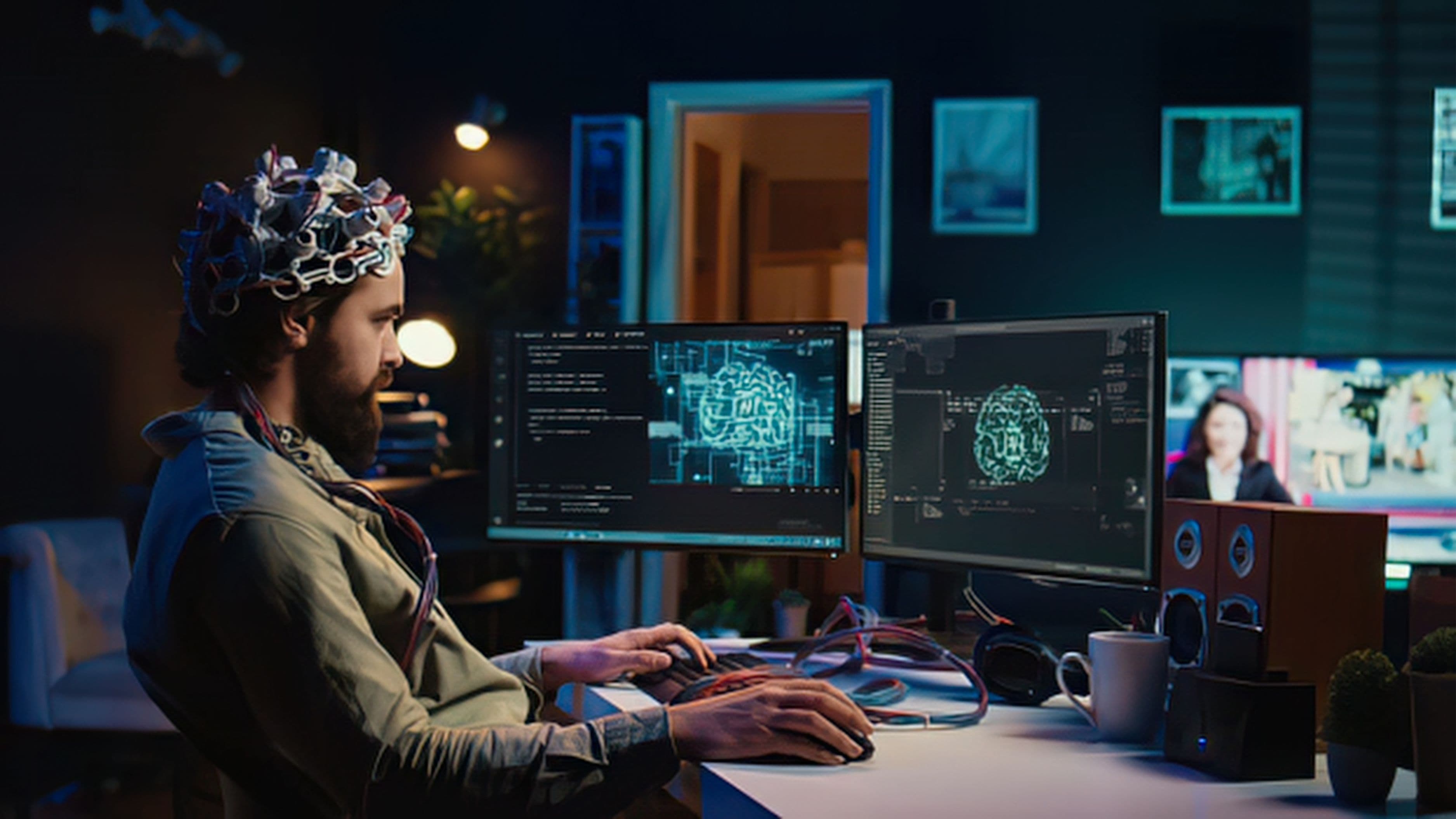
This is why most consumer-facing BCI development has focused instead on non-invasive approaches, headsets and wearables that read electrical activity through the scalp rather than requiring surgical implantation. The tradeoff is a significant drop in signal clarity and precision, since skull and scalp tissue diffuse and distort the electrical signals considerably compared to direct contact with brain tissue.
What Non-Invasive Consumer Devices Can Actually Do Right Now
Current consumer-facing neural interface products, mostly EEG-based headsets, can detect broader patterns like general focus level, relaxation state, or basic attention signals, useful for things like meditation feedback apps or simple, coarse control inputs in limited gaming or accessibility contexts. What they can't currently do is anything resembling the precise, individual-intention reading that invasive medical BCIs demonstrate, like distinguishing between the intention to move a cursor left versus right based on specific neural firing patterns.
This gap is significant enough that most experts view current consumer EEG products as a genuinely different category of technology from medical-grade BCIs, more akin to a very sophisticated mood or attention sensor than an actual thought-reading interface in the way science fiction typically depicts it.
The Real Barriers to a Consumer Future
Beyond the invasive-versus-non-invasive tradeoff, there are several other substantial barriers standing between current BCI technology and any realistic mass-market consumer product. Signal processing for genuinely useful, precise neural control still requires significant computational interpretation and, in many cases, personalized calibration for each individual user, since neural signal patterns vary meaningfully between people.
There's also a considerable regulatory and safety question, particularly for anything approaching invasive implants. Medical devices go through rigorous approval processes precisely because the risks, infection, tissue damage, long-term device failure inside the body, are serious and not easily reversible. A consumer product held to a lower safety bar than medical devices would raise legitimate ethical and regulatory concerns that regulators haven't yet fully worked through.
Where a Consumer Version Might Realistically Emerge First
The most plausible near-term consumer applications aren't full brain-reading interfaces at all, but narrower, non-invasive tools building on current EEG technology: accessibility devices for specific disabilities, enhanced biofeedback tools for stress and focus management, or specialized gaming and creative tools that use coarse neural signals as one input among several, rather than a primary control method.
A more invasive, precise consumer BCI, the kind depicted in science fiction where you genuinely think a command and a device executes it precisely, remains a substantially more distant prospect, likely requiring both significant advances in non-invasive signal reading technology and a broader societal comfort level with neural data collection that doesn't yet exist.
The Privacy Question Nobody's Fully Answered
Even setting aside the technical and safety barriers, brain data raises privacy questions more sensitive than almost any other category of personal data companies currently collect. Neural signals could, in theory, reveal information about mood, attention, and potentially other cognitive states that users might not consciously intend to share. How that data would be stored, used, or potentially monetized by a consumer tech company is a question regulators and ethicists are only beginning to seriously grapple with, well before the technology itself is mature enough to force the issue at scale.
FAQ
Are any brain-computer interfaces available to consumers right now? Non-invasive EEG headsets for basic focus and meditation feedback are commercially available, but true precise neural control interfaces remain in medical research and clinical trial stages.
How far away is a truly functional consumer BCI? Most experts estimate a genuinely capable, precise consumer-grade device is likely a decade or more away, contingent on significant advances in non-invasive signal reading technology.
Is it safe to get an invasive BCI implant today? Currently, these are only available through clinical trials for patients with serious medical conditions, where the procedure is performed and monitored by specialized medical teams under strict research protocols.
📚 Sources
Nature – Advances in Brain-Computer Interface Research: https://www.nature.com/subjects/brain-computer-interfaces
National Institutes of Health – BRAIN Initiative Overview: https://braininitiative.nih.gov/